
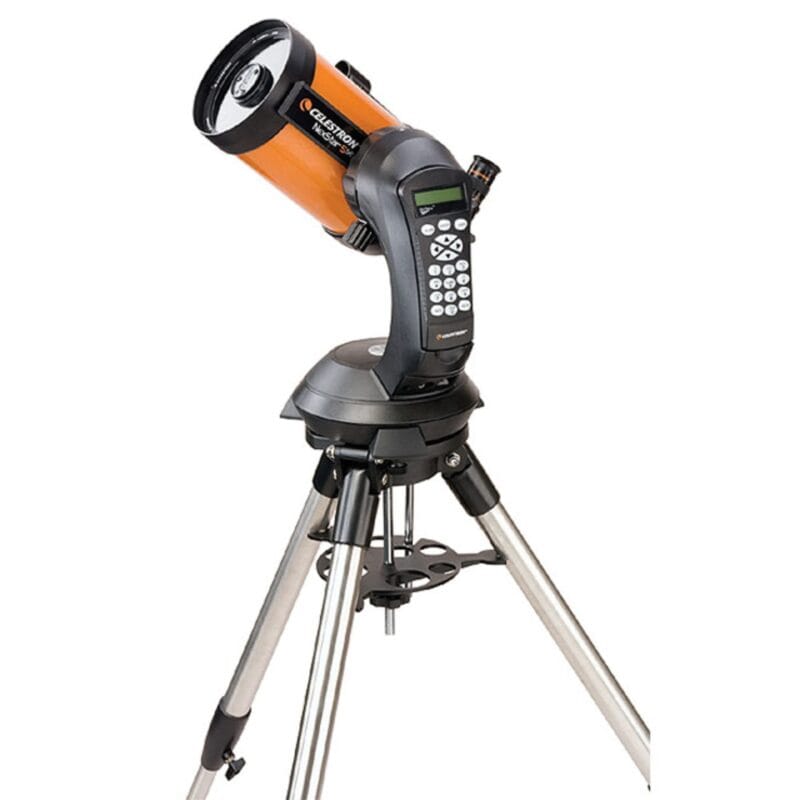
The question: what do you see through a telescope? That question almost always comes before purchase. And rightly so, because many expectations about stargazing are formed by photographs that were not taken with the human eye. Those who look through a telescope for the first time discover something different: no bright colors or exaggerated contrasts, but subtle details that are only visible because you see them yourself, in real time, with your own eyes.
In this blog, we honestly explain what you see through a telescope, why it sometimes feels different than expected, and what type of telescope determines what is possible. This is not a sales pitch, but a realistic starting point.
What do you see through a telescope as a beginner?
A telescope is neither a camera nor a magic window that suddenly makes everything spectacular. You are looking at dim light that may have been traveling for hundreds or thousands of years. What you see depends on the aperture of your telescope, the calmness of the atmosphere and how accustomed your eyes are to looking in the dark.
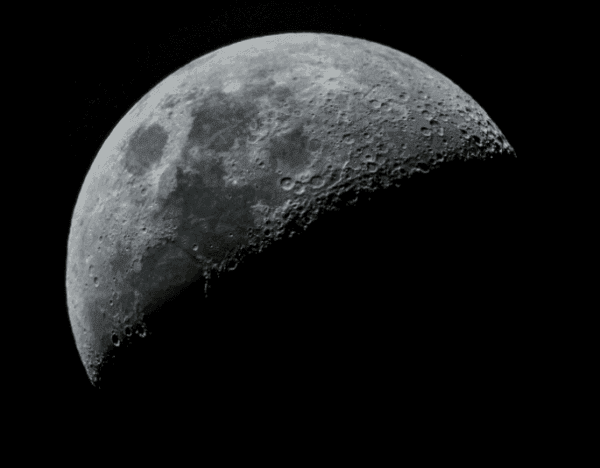
This is precisely why the first real observation is often the Moon. This is no accident. The Moon is bright, contrasty and forgiving. Even with a simple telescope, you can see craters, mountain ranges and distinct shadows. As the Moon is not quite full, the relief becomes more visible and you learn what focusing and magnification mean in practice. For many beginners, this is the moment they understand that stargazing is not a trick, but a skill.... a skill anyone can learn 😉
What do you see of the planets through a telescope?
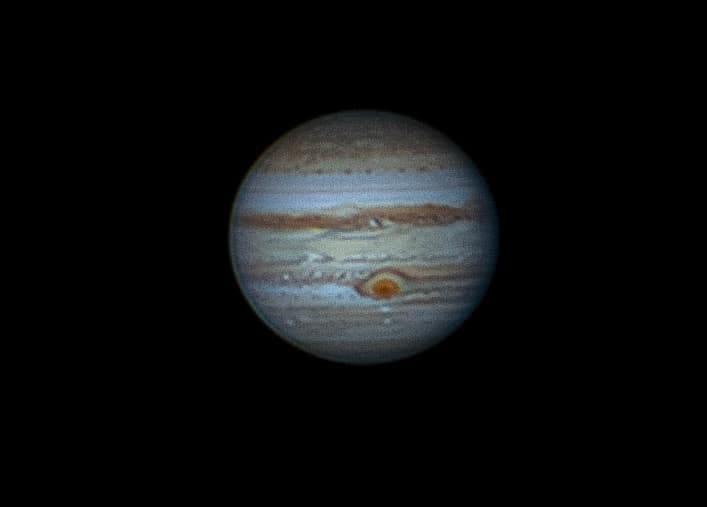
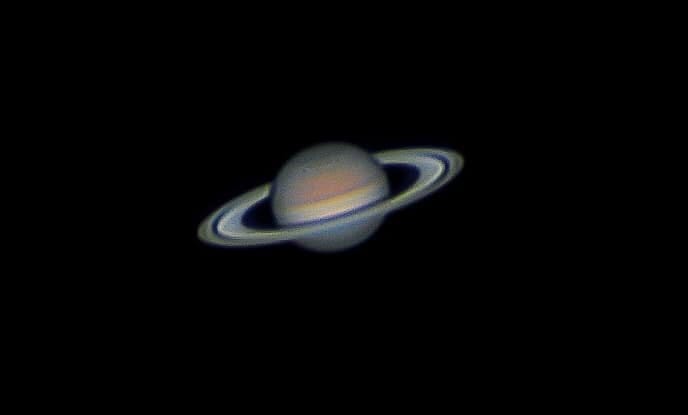
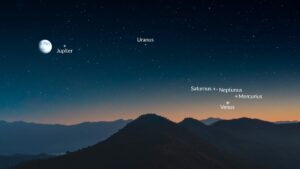
Planets are small in the sky, but bright enough to show detail. That makes them popular, but also prone to false expectations. Jupiter shows its four large moons, and in calm skies you can see bands of clouds running across the planet. Sometimes even the Great Red Spot is visible. Saturn is the tipping point for many people: the rings are almost always visible and make it immediately clear that you are really looking at another world.
Mars is a trickier story. Only around opposition, when the planet is relatively close to Earth, do you see polar caps and dark structures. At other times, it remains a small red disk. Venus shows phases, similar to the Moon, but without surface details. Mercury is the most difficult and requires a low horizon and a lot of patience.
The important thing to understand is that planets do not benefit from extreme magnification. On the contrary. Too much magnification makes the image blurry and unsettled. Quality, stability and good conditions are more important than the highest possible number on the box.
What do you see through a telescope of deep-sky objects?
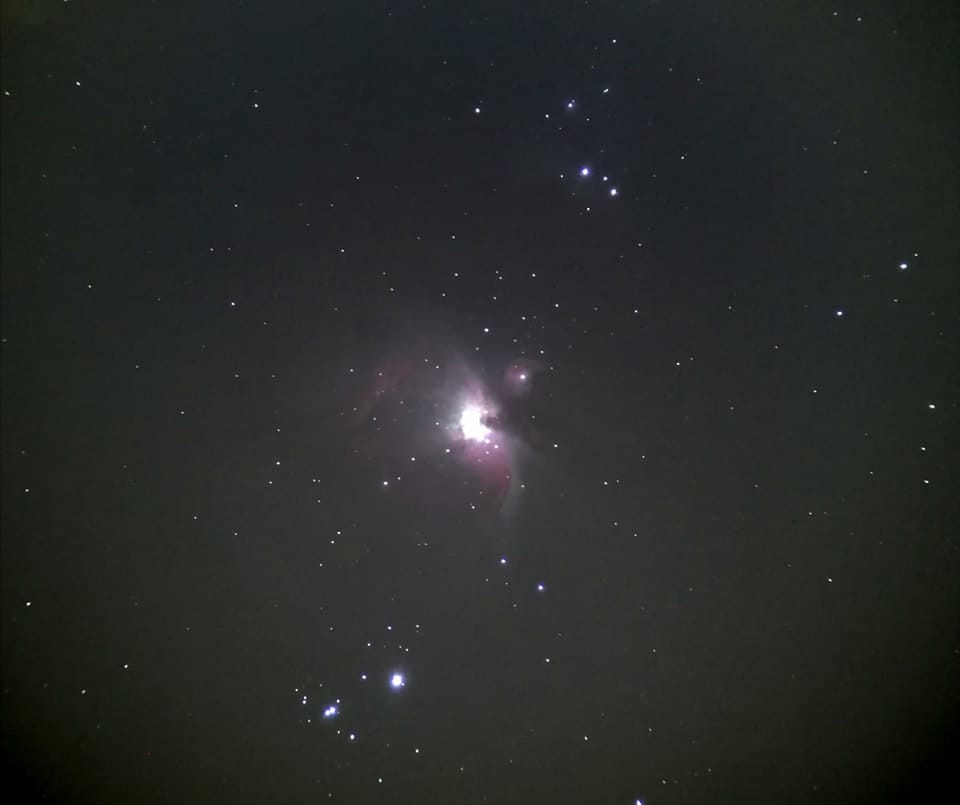
Here often arises the greatest disappointment, and also the most persistent misunderstanding. Nebulae and galaxies do not appear as they do in photographs. The human eye is barely sensitive to color in low light, so deep-sky objects visually usually appear grayish or pale white, with subtle contrast differences rather than bright hues.
That does not mean, however, that there is no structure to be seen. Star clusters are often the most rewarding, as you see dozens to thousands of stars at once, sharply defined against a dark background. Nebulae such as the Orion Nebula show up as soft, fanning shapes with clear transitions between light and dark. Galaxies such as Andromeda appear as an oval patch of light with a bright core. You don't see spiral arms as in long-exposed photographs, but you do see the size and direction of a completely different galaxy.
Those who want to get more out of this quickly find that contrast is more important than color. That is precisely where specific fog filters make the difference. A OIII filter or UHC filter suppresses distracting background light and allows exactly the wavelengths at which many nebulae emit light. The result is not color, but more clearly delineated structures. In a nebula like M42, the shape becomes sharper, and fainter parts become more visible, even under moderate sky conditions.
For many observers, that's when deep-sky objects really come alive. Not because they suddenly become colorful, but because you see more than just a faint spot. That realization that with the right telescope and the right filter you can actually get structure out of the dark is ultimately more important than color for many enthusiasts.
What don't you see through a telescope?
You don't see saturated colors like in NASA photos, because those images are made up of long exposures and post-processing. You also don't see fine details when the atmosphere is turbulent, even with an expensive telescope. Light pollution and full moon severely limit deep-sky observations. And extremely high magnifications almost never yield additional detail.
Those who understand this in advance are less likely to be disappointed and learn to watch better!
How do you get more out of your telescope?
Stargazing is all about conditions and patience. A telescope that is still warm inside distorts the image. A turbulent atmosphere distorts details. And inexperienced eyes miss subtle structures that do become visible with practice. As you observe more often, you learn to recognize contrasts and “pick up” details that at first seemed invisible.
This is why experienced observers often see more with the same telescope than beginners.
What telescope do you need to see planets?
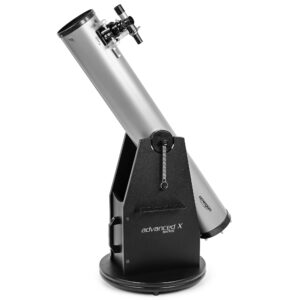
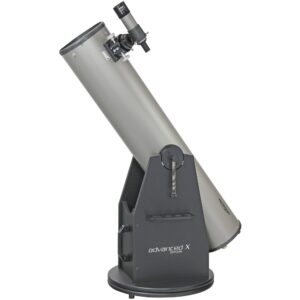
For those who want to observe visually, aperture is critical. A telescope with a larger mirror captures more light and therefore shows more detail. Dobson telescopes are particularly efficient in this regard. They are optically powerful, mechanically simple and offer a lot of performance for their price.
With a Omegon Dobson of 152 mm or 203 mm you can observe everything described in this blog. Craters on the Moon, the rings of Saturn, cloud bands on Jupiter, bright star clusters, the Orion Nebula and the Andromeda Galaxy. These are not specialized instruments, but robust scopes for people who really want to look.
Stargazing with a smart telescope
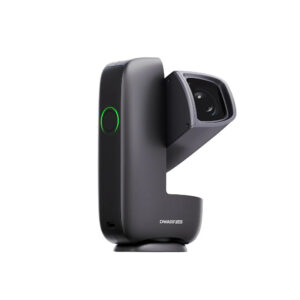
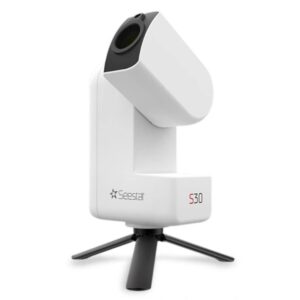
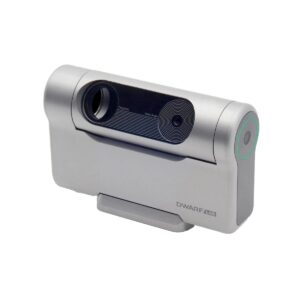
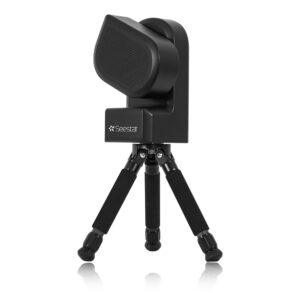
Smart telescopes are a different type of instrument. They are not designed for visual viewing through an eyepiece, but for astrophotography. You don't see an object with your eyes, but view live stacked images of nebulae and galaxies on your phone or tablet through an app. That makes it possible to see colors and textures that remain invisible visually.
Those who want to observe with their eyes choose a classic telescope. Those who primarily want to see and capture images choose a smart telescope. The purpose determines the instrument.
What to see through a telescope: what you learned
What you see through a telescope is the result of light, optics and experience. Those who understand what is realistic get much more out of it. From the rugged craters on the Moon to the rings of Saturn to the soft glow of a galaxy: everything you see, you see for yourself. And that is precisely what makes stargazing so special.
Are you unsure what type of telescope suits you, or want to know which scope fits what you want to see? Then this is the time to look further in our in-depth blogs on planets, nebulae and galaxies or to ask for specific advice.
 Dutch
Dutch English