
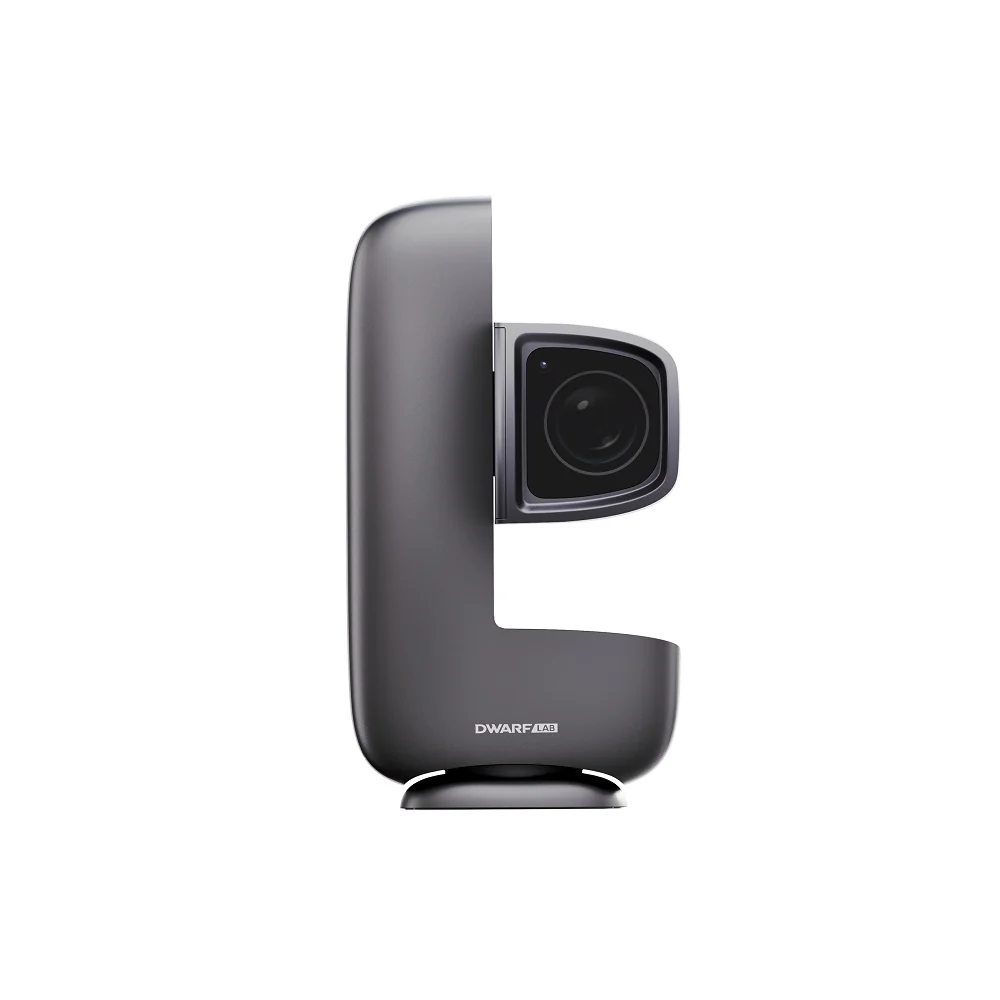
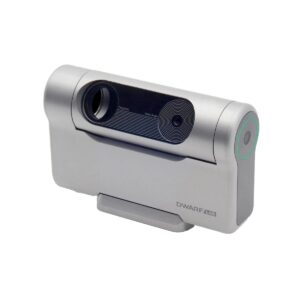
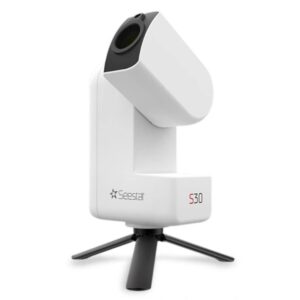
Dwarf Mini vs. Seestar S30 marks a new era in astronomy: that of the ultra-portable, smart telescope. Where we used to talk about systems that fit in a backpack, we are now talking about devices that you literally carry in your coat pocket to a dark location. This miniaturization is impressive, but it also brings specific physics challenges. As a telescope gets smaller, its light-gathering ability decreases and the software has to work harder to produce a usable image. In this article, we analyze how the Dwarf Mini relates to the Seestar S30 and what you can realistically expect from these compact systems.
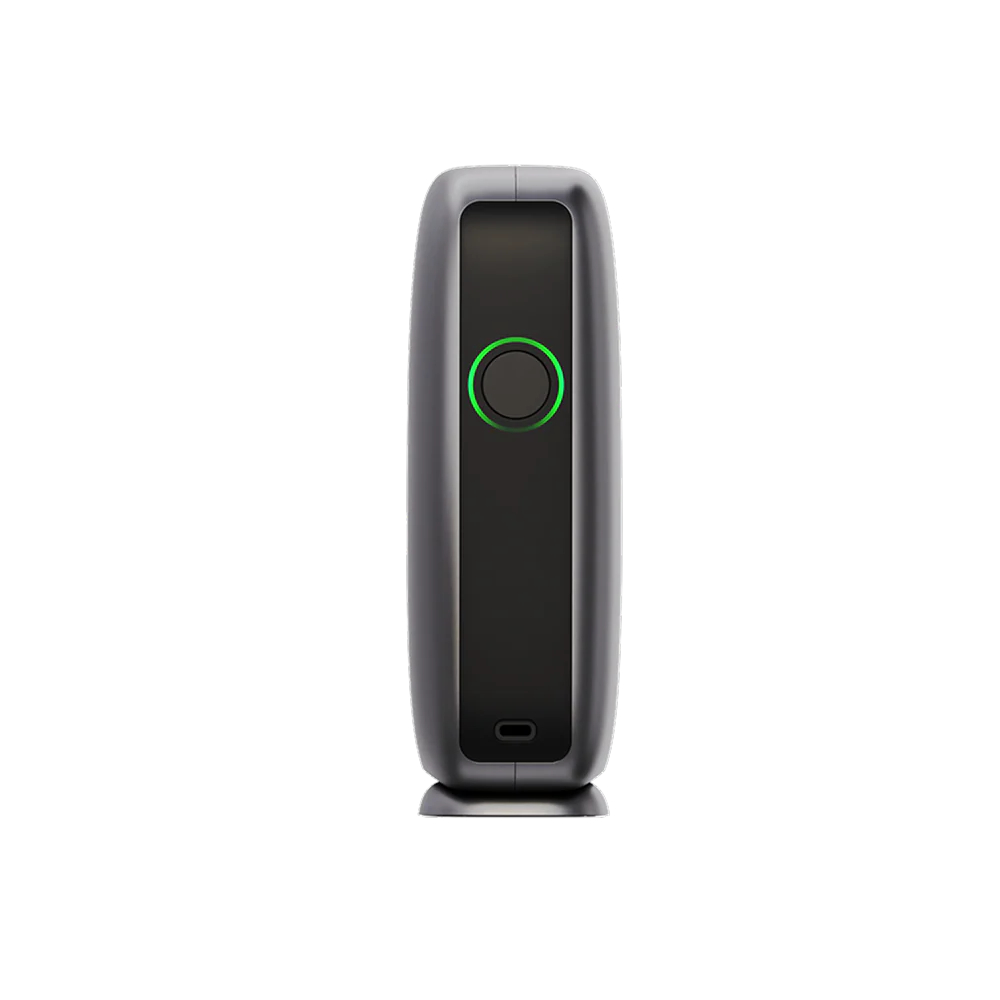
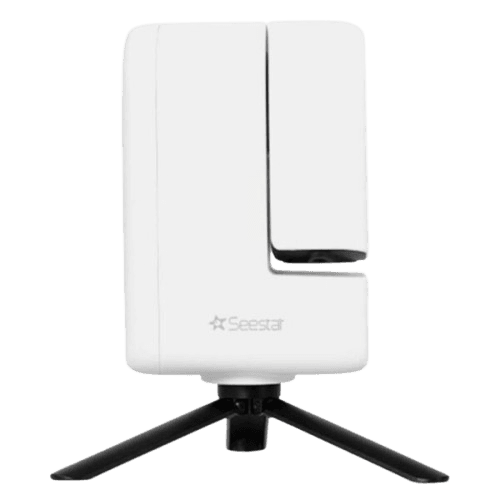
First of all, what's in the box?
| Starting price (EU) | Around €450 | Approximately €499-€549 | Mini is cheaper |
| Tripod included? | No (purchase separately) | Yes (Basic Tripod) | S30 comes with a tripod, Dwarf Mini does not. |
| Weight of the telescope | 0.85 kg | 1.65 kg | Dwarf Mini is lighter (but the weight of the S30 is including tripod). |
| Weight with tripod included | 1.64 kg (0.85 kg + 0.79 kg tripod) | 1.65 kg | About the same weight once all accessories are added |
| What's in the box? | Solar filter & basic accessories such as USB cable and protective case. | Solar filter, basic accessories, tripod and carrying case. | Little difference, although the S30 does come with slightly more accessories. |
Dwarf Mini vs. Seestar S30: Optical limitations and the reality of 24mm vs. 30mm
At the heart of any telescope is the aperture, also known as the aperture. The Seestar S30 features a 30 mm objective lens. The Dwarf Mini goes one step further in compactness with a 24 mm lens aperture. In the world of optics, this is a significant difference. In fact, a 30 mm lens has a larger surface area to capture photons than a 24 mm lens, which is essential for making faint nebulae and galaxies visible.
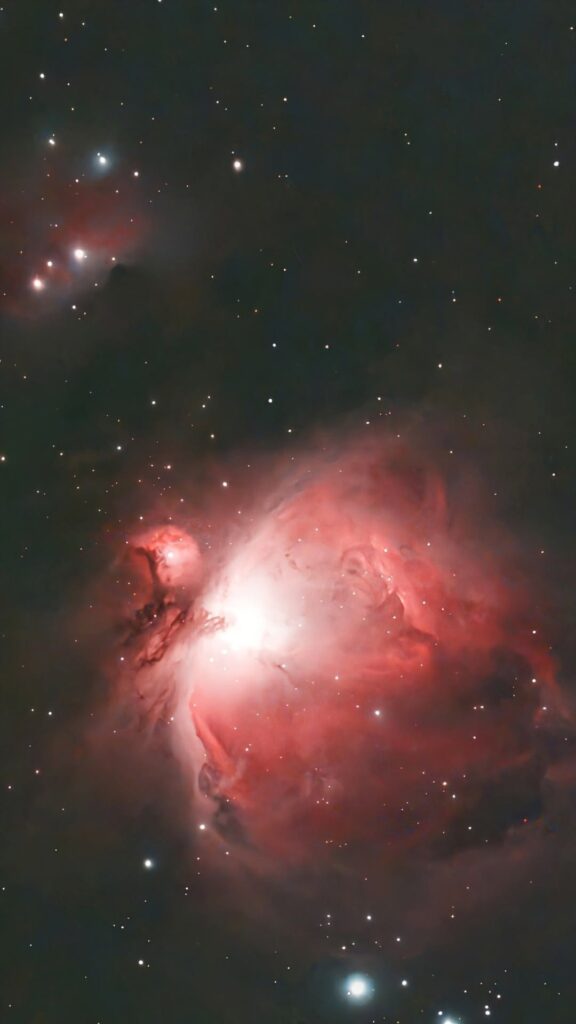
The Seestar S30 uses a triplet apochromatic design. This means that three lens elements are used to correct refraction and prevent color errors. The Dwarf Mini opts for an even simpler and lighter system to keep size minimal. Although the Dwarf Mini is impressively small, understand that a 24 mm aperture can theoretically show less detail than the Seestar's 30 mm. According to the laws of diffraction, as described in the optics guidelines of the European Southern Observatory (ESO)., the maximum resolution of a telescope is directly linked to the diameter of the lens. The smaller the lens, the less sharp the details at high magnification.
Dwarf mini vs. Seestar S30: Sensor resolution and field of view
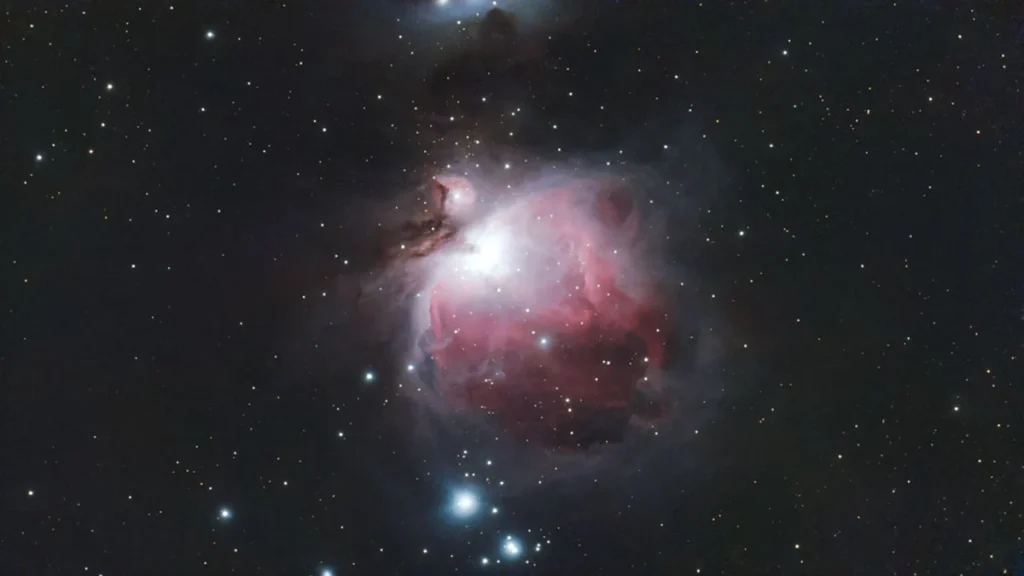
In comparing the Dwarf Mini vs Seestar S30, we can see a difference in how they image the sky in the image above. The Dwarf Mini is primarily designed as a wide-field camera. Because of the short focal length and the sensor used, you get a tremendously wide view of the night sky. This makes the Dwarf Mini ideally suited for:
- Large constellations such as Orion in its entirety.
- The Milky Way arm from a very dark location.
- Tracking large groups of satellites or meteor swarms.
The Seestar S30 has a slightly longer focal length and focuses more on isolating specific objects. Although 30 mm is still small for deep-sky work, the image frame is narrower than with the Dwarf Mini. As a result, objects such as the Andromeda Nebula or the Lagoon Nebula appear larger in the Seestar S30‘s image. Thus, the Dwarf Mini is more of an ’environmental scope," while the Seestar S30 takes its first steps toward focused object photography.
Software, stacking and artificial intelligence of both telescopes
Because the hardware on both the Dwarf Mini and the Seestar S30 is so small, both devices lean heavily on ‘computational astronomy. This process involves the telescope taking hundreds of short exposures and superimposing (stacking) them to reduce noise and build up light information.
The Seestar S30 benefits from the manufacturer's mature software, known for its effective algorithms for recognizing star patterns. The Dwarf Mini, on the other hand, bets on extreme speed and a very intuitive app experience. An important point to note is that the Dwarf Mini's compactness makes it more sensitive to vibrations. A solid surface is a requirement for both models, but with the light weight of the Dwarf Mini, even a breath of wind can affect the recording. The software tries to correct for this by discarding moved frames, but this does mean you have to expose longer in windy conditions for the same result.
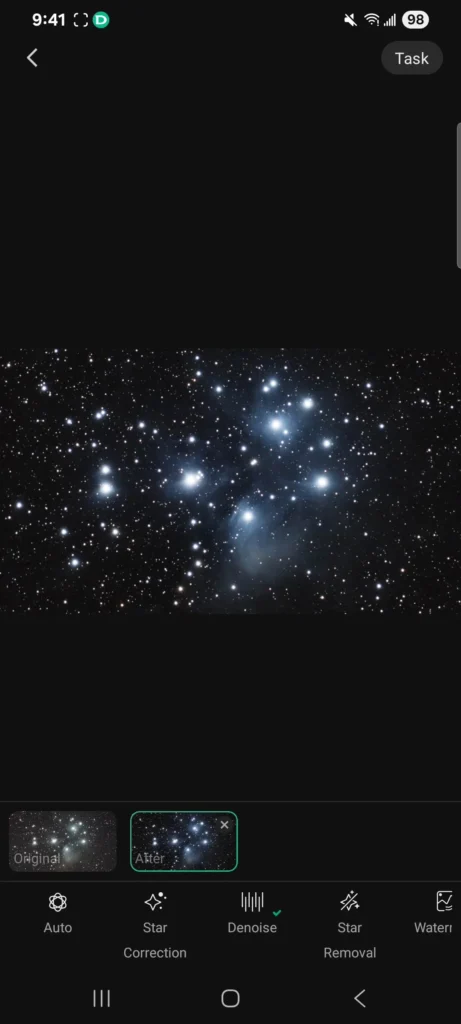
One of the biggest differences between the Dwarf mini and the Seestar S30 is the image processing workflow. With the Dwarf Mini, you go through the entire process of ‘live stacking’ to a shareable final result without ever touching a computer.
Once a stack is complete, you can open it in Stellar Studio within the DWARFLAB app. From there, you can ‘stretch’ the image, adjust contrast, apply noise reduction and even add a watermark directly on your phone. For beginners, this is a significant advantage; you don't need a dedicated astrophotography PC or expensive software to get a nice final image. For experienced astronomers, it's an ideal way to make a quick ‘field edit’ for social media or family/friends, while keeping the raw data for extensive post-processing at a later date.
In fact, the Dwarf Mini also saves FITS files during the process. This allows you to load the data into specialized software such as PixInsight, Siril or Photoshop when you return home. This makes it suitable both as the first telescope for a beginner, and a practical second setup for the advanced user.
Practical limits of both telescopes
It is our responsibility to avoid disappointment by being honest about the limits of this technique. In the Dwarf Mini vs Seestar S30 comparison, consider the following:
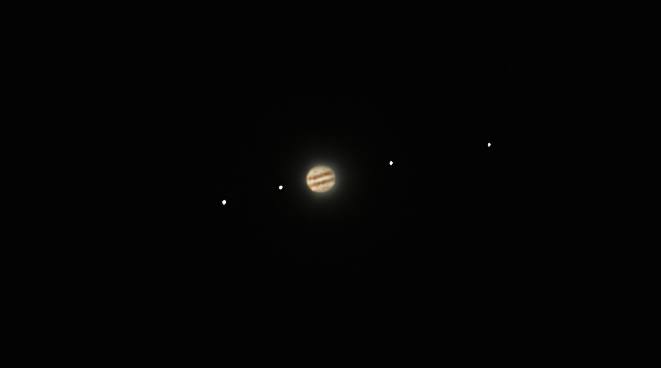
- No planets: Don't expect details on Mars, Jupiter or Saturn. With an aperture of 24-30 mm, planets remain little more than bright discs or dots of light with no structural details.
- Light pollution: Although both telescopes use digital filters, they cannot do magic. In a city with many lampposts, the results will be more limited than if you are stargazing in the mountains!
- Long wait times: Because the lenses are so small, you need a lot of time. A nice photo of a nebula often takes 30 to 60 minutes of ‘stacking time’ with these systems.
The advantage of the Dwarf Mini is its extreme portability; it is the ultimate gadget for those who always want to have a telescope with them “just in case.” The Seestar S30 is slightly more serious in terms of optical performance, but lacks the extreme pocket-size factor of the Dwarf and requires use of external software to do post-processing.
The DWARF Mini vs Seestar S30: our final conclusion
We could make a very long story out of it, but it still remains pretty simple in our opinion. The Dwarf Mini wins out on mobility, larger objects and ease of use. You don't need external software to beautify and share your astrophotos, you just need an inside pocket to transport it (ha-ha) - all in all, you have a lot more options. The Seestar S30, on the other hand, is really made for plug and play. You need less thinking - you set it down, connect the telescope to the app and you're already ready to go. People who like such simplicity should definitely go for the S30! If you prefer a little more control and don't feel like constantly taking your pictures off your telescope and connecting them to a laptop/computer for post-processing, just choose the Dwarf Mini.
All in all, both systems are excellent entry-level systems that remove the frustration of manually searching for stars. They are meant for learning and discovery, not to replace professional astrophotographers. If you are unsure about which format best suits your use case, check out our comprehensive selection guide for compact telescopes on Telescoop.nl, where we take a closer look at the workflow of these devices.


 Dutch
Dutch English