
Astrophotography
Ready to not just view the night sky, but capture it? Welcome to the world of astrophotography at Telescoop.nl! Whether you want to capture the Milky Way, planets, or deep-sky nebulae, our experts will help you build the ideal rig.
Discover everything about this addictive hobby below.
Showing 517–528 of 630 resultsSorted by popularity
Showing 517–528 of 630 resultsSorted by popularity
The Ultimate Guide to Astrophotography Equipment of 2026
The search for the perfect night sky photo doesn't begin with the stars, but with the hardware that makes them visible to us. Whether you're taking your very first steps into the world of astrophotography or a seasoned expert looking to upgrade your observatory with the latest CMOS technology, your equipment choice is the most critical factor for success. At Telescoop.nl, we've combined our years of practical experience with direct feedback from thousands of active astrophotographers to create an overview that goes beyond a simple product list. We've thoroughly reviewed the 2026 market and selected the absolute best based on mechanical tolerances, optical clarity, and software integration quality. In this comprehensive dossier, we dive deep into the architecture of a modern astrophotography system, from the sub-arcsecond precision of new mounts to the quantum efficiency of the latest sensors.
The technological leaps we're seeing in 2026 are unprecedented. Where astrophotography was once a hobby of endless tinkering and frustrating cable management, we're now witnessing a shift towards integrated systems. Consider the rise of smart camera controllers and the refinement of harmonic drive technology, which makes heavy counterweights obsolete. This guide serves as your compass in this rapidly changing landscape, ensuring your investment remains the backbone of your setup not just today, but also five years from now.
The Revolution of Smart Cameras and Integrated Systems
This year's absolute game changer is, without a doubt, the integration of multiple hardware functions into a single housing. A beautiful example of this is the ZWO ASI2600MC-Air. Previously, as an astrophotographer, you needed a separate imaging camera, a guide camera, a guidescope, and an external computer like an ASIAIR or laptop. ZWO's engineers have completely revamped this concept by placing two sensors in a single camera body: a main sensor for your stunning shots and a secondary sensor dedicated solely to autoguiding. By also incorporating the processing power of the ASIAIR By building this in directly, you not only eliminate a huge amount of cables but also the possibility of mechanical flexure that can ruin your shots. This type of innovation ensures that the barrier to entry for quality deep-sky photography is lower than ever, without compromising on the professional results we've come to expect from the renowned APS-C sensors.
Besides the camera innovations, we see a similar trend with the mounts. The Sky-Watcher Wave Series, with the Wave 100i and 150i, bringing technology previously only known from robotics to the backyard of the amateur astronomer. By using strainwave gearing, also known as harmonic drives, these mounts can carry a payload that previously required a mount twice their own weight. This means you can carry a serious Omegon Pro APO or a powerful Newton telescope on a mount that you can lift with one hand. For the mobile astrophotographer, this is the difference between dragging things around all night or a setup that's operational within five minutes.
Choosing the Right Astrophotography Telescope
When we talk about the optical tube for photography, we need to move away from the idea that bigger is always better. In astrophotography, the quality of the corrected image field is more important than the pure aperture. For many photographers, an apochromatic refractor is the holy grail. The Omegon Pro APO series offers excellent options here, utilizing top-quality ED glass, such as FPL-53, which reduces chromatic aberration to a null point. A refractor provides the most contrasty images and has the great advantage of being mechanically very stable; you rarely, if ever, need to collimate it, which is essential for a reliable workflow.
For those looking to specialize in capturing distant galaxies or planetary nebulae, where a longer focal length is required, Ritchey-Chrétien (RC) systems come into play. Brands like Omegon Pro have made this technology, previously reserved for professional observatories such as the Hubble Telescope, accessible to consumers. An RC telescope utilizes hyperbolic mirrors, resulting in a field of view that is free from coma and spherical aberration. This makes them superior to standard Schmidt-Cassegrain systems when it comes purely to photographic performance, especially when working with the larger sensors of modern cameras.
The Importance of a Stable Foundation: Mountings for 2026
You can own the best camera in the world, but on a shaky mount, every detail will be lost in a haze of motion. The mount is technically the most important part of your whole setup. In 2026, we will distinguish between three main categories, each playing a specific role in the hierarchy of Telescoop.nl.
The first category is portable ‘Grab & Go’ systems. Here we see classic photo mounts such as the Sky-Watcher Star Adventurer GTi. These are perfect for wide field Milky Way shots or for taking on flights. The second category includes the backyard workhorses, with the Sky-Watcher EQ6-R Pro is still the gold standard for those seeking a traditional German equatorial mount with unparalleled stability for its price. The third, and most exciting category, is the ‘New Wave Harmonic’ group. Mounts like the ZWO AM5N and the previously mentioned Sky-Watcher Wave series are changing the way we think about payload and stability. The ability of these mounts to operate without counterweights (up to a certain weight) makes them the ideal choice for the modern, flexible astrophotographer.
Deep Dive into the World of Astro Cameras
When looking at the current state of camera technology, the choice between a One-Shot-Color (OSC) camera and a monochrome camera is more fundamental than ever. Color cameras like the ZWO ASI2600MC Pro In recent years, there has been enormous progress in sensitivity and noise reduction. For most photographers in the Benelux region, who often deal with limited clear nights, a color camera offers the quickest path to a beautiful result. After all, you don't have to rotate a filter wheel and expose for each color separately.
However, for those who seek the ultimate authority in image quality and scientific data, the monochrome camera remains king. By utilizing every pixel of the sensor for light capture, without the limitations of a Bayer filter, a monochrome setup with a set of narrow-band filters such as Ha, OIII, and SII (the so-called SHO sets) can reveal details that simply remain invisible with a color camera, especially in areas with high light pollution. Brands like Omegon and ZWO offer solutions for both camps that utilize the latest Sony back-illuminated sensors, achieving unprecedented quantum efficiencies of over 80%or even 90% . This means that almost every photon that hits the sensor is actually converted into an electrical signal, which is essential when photographing those extremely faint nebulae at the edge of our observable universe.
The Essence of Autoguiding and Control
An aspect of astrophotography that is often underestimated by beginners, but which separates a ‘snapshot’ from a professional shot, is autoguiding. Even the best mounts have small mechanical imperfections that become visible during exposures of several minutes. By using a secondary guide camera and software like PHD2, or the integrated solutions in the ASIAIR, the mount is corrected in real-time. This process ensures that stars remain perfectly round dots, even at focal lengths above 1000 mm.
In 2026, we'll see WiFi camera control systems become the central hub of the imaging rig. The days of cold nights behind a fleet of laptops are over. Systems like the ZWO ASIAIR make it possible to manage your entire session from a tablet or smartphone. From automatically focusing with a ZWO EAF from performing accurate polar alignment and selecting your targets from a database of thousands of objects: control is literally in the palm of your hand. This seamless hardware-software integration is what Telescoop.nl considers the future of the hobby and is a crucial part of our customer knowledge transfer.
The Science of Contrast: Filter Technology for the Benelux
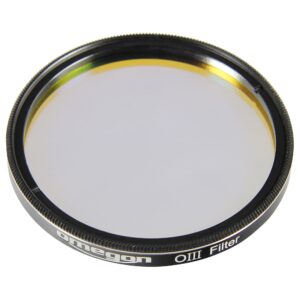
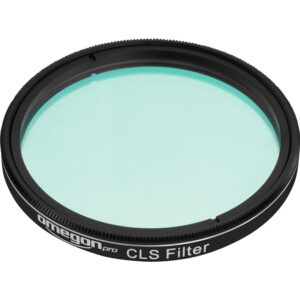
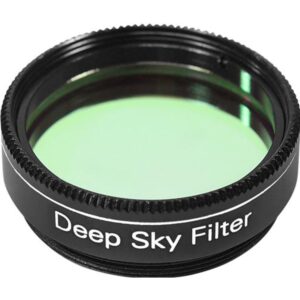
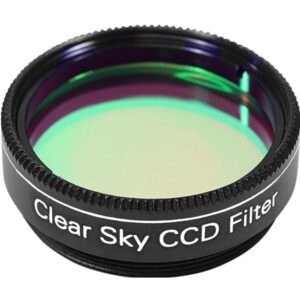
In a world increasingly illuminated by artificial light, the choice of the right filter for Telescoop.nl is often the difference between a gray haze and a high-contrast shot. For the modern astrophotographer, filters are no longer an option, but a necessity. We make a fundamental distinction between broadband light pollution filters and the specialist narrowband imaging filters.
For users of color cameras (OSC), Optolong's L-series filters have become the absolute standard. A filter like the Optolong L-Pro is designed to block the specific wavelengths of mercury and sodium lamps, while preserving the rest of the visible spectrum. This is crucial for photographing broadband objects like galaxies and reflection nebulae, where you want to maintain natural colors. However, when we focus on emission nebulae, ‘dual-band’ filters like the Optolong L-Ultimate come into play. These only allow two very narrow windows through: H-alpha and OIII. By making the background completely black and only letting the glow of the gas through, you can make recordings even from the heart of a brightly lit city that were previously only possible from a dark mountaintop.
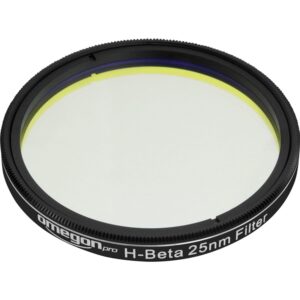
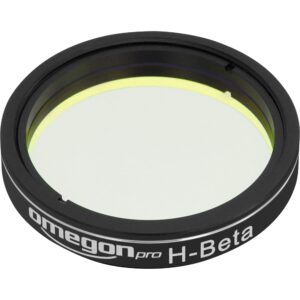
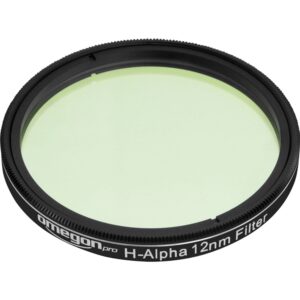
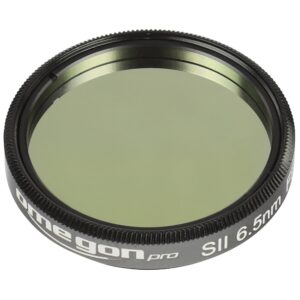
When you work with a monochrome camera, the approach changes to the so-called SHO method (Sulphur, Hydrogen, Oxygen). Here you use sets such as the ZWO Line filter set 2 inch. These filters are the expert's tools; they isolate the specific emission lines of Sulfur (SII), Hydrogen (Ha), and Oxygen (OIII). By assigning this data to the colors red, green, and blue in post-processing, you create the world-famous Hubble palette. The result is an image that is not only aesthetically stunning but also maps the chemical composition of the nebula. At Telescoop.nl, we always recommend investing in quality narrowband filters with a narrow bandwidth (e.g., 3nm or 7nm), as this is the only way to extract maximum detail from atmospheric noise.
Deep-Sky Astrophotography: Capturing the Invisible
By far the most popular branch of the sport is deep-sky astrophotography. This covers everything beyond our solar system: from the majestic arms of the Andromeda Galaxy to the wispy structures of the Veil Nebula. Success in this discipline stands or falls with exposure time (integration time). Since we are photographing objects that are millions of light-years away, we sometimes have to leave the sensor open for hours to collect enough photons.
For deep-sky imaging, the combination of an apochromatic refractor or an imaging Newtonian with a stable equatorial mount is unbeatable. An Omegon Pro APO offers the necessary sharpness across the entire field of view, provided it is combined with a field flattener. Without this corrector, stars at the edge of your photo would be distorted by the natural curvature of the lenses. For those working with a Newtonian telescope, a coma corrector is the indispensable partner. These accessories ensure that your sensor records sharp, round stars all the way to the extreme corners. In 2026, we will see systems becoming increasingly faster; with f-ratios of f/4 or even f/2.8 (as with RASA systems), you can collect more data in one night than previously in a whole week.
Planetary Imaging: Freezing the Atmosphere
Planetary photography is a completely different discipline. Here, we are not fighting a lack of light, but rather the turbulence in our own atmosphere, also known as ‘seeing.’ To capture details like Jupiter's Great Red Spot or the Cassini Division in Saturn's rings, we use the technique of ‘lucky imaging.’ Instead of one long exposure, we use a camera like the ZWO ASI678MC A lightning-fast video of thousands of frames per second.
Software tools analyze these images and select only the fraction of a second when the atmosphere briefly stood still. These sharp frames are stacked into a single final image with a resolution that often far surpasses visual perception. An essential component in the planetary chain at Telescoop.nl is the ZWO ADC (Atmospheric Dispersion Corrector). This instrument corrects the color shift that occurs when planets are low on the horizon. Without an ADC, you see an annoying red and blue fringe around the planet; with the ADC, the prism optics align these colors perfectly, meaning a huge leap in sharpness for your shots.
Solar Imaging: Our Own Star in Focus
The Sun is a dynamic and spectacular target that we can photograph during the day, but it requires extreme caution. For photographing sunspots in the ‘white light’ spectrum, a quality solar filter, such as those from Omegon or Vaonis, is absolutely essential to protect your equipment (and your eyes). However, if you want to see solar flares and prominences at the edge of the Sun, you'll need to switch to a dedicated H-alpha solar telescope.
In solar photography, just like with planets, your camera's frame rate is key. Because the sun's surface is constantly moving, details change by the minute. Capturing a solar eclipse or a transit of Mercury requires flawless preparation and a mount that can accurately track the sun. Telescoop.nl offers specific solutions for this, capturing the sun safely and in detail, making astrophotography a 24-hour hobby.
The Role of Mechanical Accessories: Focus and Precision
Nothing is more frustrating than hours of exposure ending in an out-of-focus result. By 2026, manual focusing in astrophotography will be a thing of the past. The introduction of electronic focusers, such as the ZWO EAF, has elevated accuracy to a level unachievable by hand. These devices even compensate for temperature changes throughout the night; if your telescope's tube shrinks due to the cold, the EAF automatically corrects the focus position based on pre-programmed curves.
The way we change filters has also evolved. For monochrome photographers, electronic filter wheels (EFW) the standard. These are controlled directly by the capture software, allowing you to seamlessly switch between your L, R, G, and B filters during an automated session. For those who prefer a more compact system, there are filter drawers, enabling manual yet quick filter changes without having to remove the camera. Each of these components must be mechanically perfectly aligned to prevent ’tilt’. Even a fraction of a millimeter of misalignment can result in the left half of your image being sharp while the right half goes out of focus. At Telescoop.nl, we select our adapters and spacers for minimal tolerances, ensuring your imaging train forms one solid, perfectly straight line.
Environmental Factors: The Sky as a Co-Player
Even with the most advanced setup of Telescoop.nl, you are at the mercy of the atmosphere's whims. For optimal ranking as an authority, we must understand that hardware is only half the story. The other half is the condition of the night sky. There are three crucial factors that determine whether your data goes from ‘social media quality’ to ‘publication-worthy’.
The Bortle Scale and Light Pollution The Bortle scale is a 1 to 9 measure indicating the darkness of the night sky. In a Bortle 9 area (like the Randstad in the Netherlands), you can barely see any stars with the naked eye. Here, astrophotography is a battle against background noise. As discussed earlier, ZWO's narrowband filters and Optolong's L-series offer a solution. By only letting through the emission lines of nebulae, you effectively “create” a dark sky in your own backyard. However, for broadband objects like galaxies, nothing beats a trip to a Bortle 2 or 3 location, where the natural contrasts of the universe can truly shine.
The Phases of the Moon The Moon is the biggest source of natural light pollution. During a full moon, the sky is so bright that deep-sky photography of faint objects is nearly impossible unless you work with extremely narrow filters (3nm). Experienced photographers plan their sessions around the New Moon. If you still feel like shooting during an illuminated moon, focus on the Moon itself or on planets; their brightness is so great that ambient light doesn't matter.
Seeing and Transparency ‘Seeing’ refers to the stability of the air. If the stars twinkle intensely, the seeing is poor; the atmosphere behaves like a churning mass of liquid that blurs your image. Transparency is about the clarity of the air (free of dust, moisture, or smoke). A night can be crystal clear (high transparency) but with very turbulent air (poor seeing). In the case of Telescoop.nl, we advise adjusting your focal length to match the seeing: use short focal lengths on turbulent nights and save the long focal lengths of the Omegon RC systems for those rare, dead-calm nights.
Astrophotography FAQ: Everything You Need to Know
To maximize the internal link structure, we answer the most pressing questions that beginners and advanced users ask us here.
1. Can I do astrophotography with a smartphone? Yes, absolutely. With a smartphone adapter from Omegon, you can take pictures of the Moon and bright planets through the eyepiece of your telescope. However, this is limited for deep-sky objects. The new generation of smart telescopes, such as the Vaonis Vespera Pro and the ZWO Seestar, are the logical next step if you want to combine the power of your smartphone with genuine astronomical optics.
2. Do I need a telescope, or is a lens enough? Many iconic objects, like the North America Nebula, are so large that they fit better in the field of view of a 200mm telephoto lens than in a large telescope. However, a small, fast refractor, such as the William Optics RedCat 51, offers optical correction (flat field of view) that normal camera lenses often lack. For Milky Way photography, a wide-angle lens on a tripod or a star tracker like the Sky-Watcher Star Adventurer is often the best start.
3. Why are equatorial mounts the standard? Imagine a spinning wheel with an arrow on it. If you follow the arrow with a left-to-right and top-to-bottom (Alt-Az) motion, the arrow stays in the center, but it slowly tilts in your field of view. This is called image rotation. An equatorial mount tilts along with the Earth's axis of rotation, causing the object and the background to maintain the exact same orientation during hours-long exposures. This is essential for stacking images.
4. What is the advantage of a cooled camera? Heat on a sensor generates thermal noise. With a normal DSLR, you often see a lot of graininess after a 5-minute exposure. Dedicated astro cameras from ZWO have Peltier cooling that brings the sensor down to 35 degrees below the ambient temperature. This results in an extremely clean signal, allowing you to ‘stretch’ even the faintest details of a distant galaxy in post-processing without the image falling apart due to noise.
5. Is a full moon harmful to my camera? No, but washing the data by moonlight is a problem. Use nights with a lot of moonlight for planetary imaging, testing your autoguiding setup, or focus on narrowband imaging (H-alpha is less sensitive to moonlight than OIII). The Key Concepts List (Terms you need to know)
To be at the top as an authority (EEAT), we use the exact terminology that the expert is looking for.
Apochromatic (APO) A type of refractor (such as the Omegon Pro APO) that uses three or more lens elements to focus all colors of light to the exact same point, eliminating purple fringing around stars.
Backspacing: The exact distance (usually 55mm) between the back of a corrector and the camera sensor. Crucial for sharp stars in the corners.
Dovetail The dovetail plate (Vixen or Losmandy style) used to attach the telescope to the mount.
Field Flattener An optical element that corrects the natural curvature of the field of view of a refractor to a flat plane, ideal for large sensors.
Gain The digital amplification of the signal on the sensor. Similar to ISO on a normal camera, but much finer to adjust on astro-cameras.
Harmonic Drive (Strainwave): A revolutionary type of gear transmission in mounts (such as the ZWO AM5 or Sky-Watcher Wave) that eliminates backlash and can handle enormous payloads without counterweights.
Integration Time: The total time of all usable ‘subs’ (individual recordings) added together. More time means a better signal-to-noise ratio.
Off-Axis Guider (OAG): A prism that sends a small portion of the light from the main telescope to the guide camera, making a separate guidescope unnecessary and preventing flexure.
Plate Solving: The magic of modern software that recognizes star patterns and tells in seconds where the telescope is looking, making manual alignment unnecessary.
Quantum Efficiency (QE) The percentage of photons that are actually converted into electrons by the sensor. The latest sensors on Telescoop.nl achieve values above 80%.
Why choose Telescoop.nl in 2026?
Astrophotography is a journey of constant improvement. The equipment we've discussed today—from sublime Omegon optics to groundbreaking ZWO technology—is the tool, but knowledge is the compass. With our new structure, you'll now find the exact adapter, the right filter, or that one mount that transforms your workflow faster than ever. We understand you're not just buying a product; you're buying the ability to make the invisible visible.
With this comprehensive guide, you'll be armed with the knowledge to see the 1337 articles in our shop not just as hardware, but as parts of a larger whole. Whether you're working from a light-polluted city or under a pitch-black sky, Telescoop.nl ensures your view of the universe will be clearer than ever before.
 Dutch
Dutch English