
Astrophotography Mounts
Showing 1–12 of 79 resultsSorted by popularity
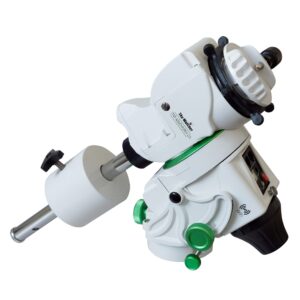
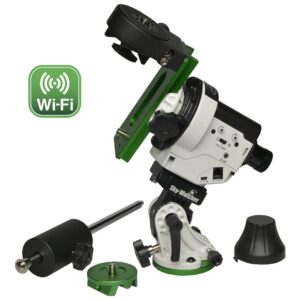
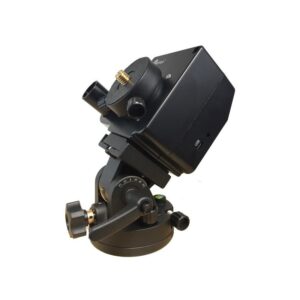
Showing 1–12 of 79 resultsSorted by popularity
The importance of a Astrophotography Mount
In astrophotography, the mount is the most critical component of the entire setup. While a visual observer can be satisfied with a simple setup, photography requires a system that compensates for the Earth's rotation with utmost precision. A stable mount prevents vibrations and ensures that celestial objects remain in the exact same position on the sensor during long exposures.
Equatorial versus Azimuthal Mountings
For serious astrophotography, a Equatorial mount (EQ) the standard. By placing one axis parallel to the Earth's axis (polar alignment), the mount can track the night sky with motion along only one axis. This prevents ‘field rotation’, a phenomenon where the object in the image appears to rotate during exposure. Azimuth mounting are more compact, but without extra tools like a field de-rotator they are less suitable for long-term deep-sky imaging.
Load capacity and stability
When selecting a mount, the maximum payload capacity is the determining factor. A rule of thumb in astrophotography is to load the mount to about 50% to 60% of the specified maximum payload capacity for visual use. This provides the necessary margin for accessories such as a guide camera, dew heaters, and cabling, while maintaining tracking precision. An overloaded mount will inevitably lead to tracking errors and unsharp stars.
GoTo systems and tracking accuracy
Modern fixtures are almost always equipped with GoTo functionality. This allows automatic mounting of thousands of objects in the database. However, for photography, the quality of the internal drive (such as worm gears or Strain wave gears) even more important. This determines the so-called periodic error. The smaller and more predictable this error, the more effectively you can guide towards high-resolution results.
Different types for each purpose
Within our range, we distinguish several categories:
Star Trackers: Compact, lightweight mounts for use with DSLRs and wide-angle lenses.
German Equatorial Mounts (GEM): The classic choice for precision and stability with heavier telescopes.
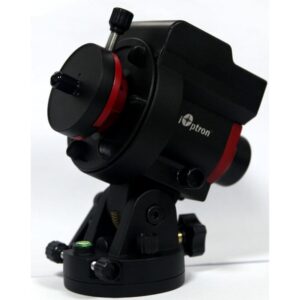
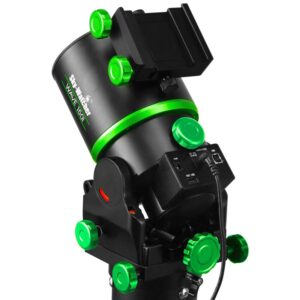
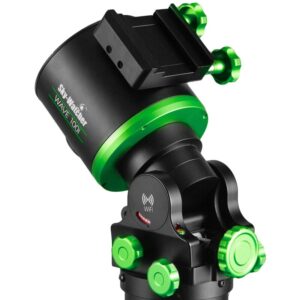
Harmonic Drive Mountings: Modern systems with a very high power-to-weight ratio, ideal for photographers who work on location a lot.
Advice for your astro-rig
The choice of mount is closely related to the weight and focal length of your telescope. Our experts are happy to advise you on the right combination, so that your investment forms a solid foundation for years of progress in astrophotography.
 Dutch
Dutch English