
Harmonic EQ
Showing 1–12 of 30 resultsSorted by popularity
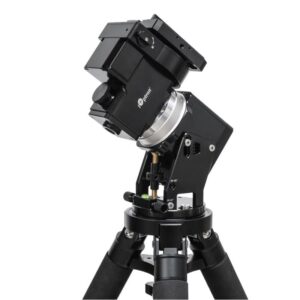
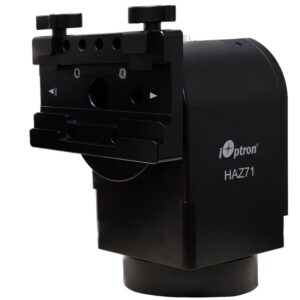
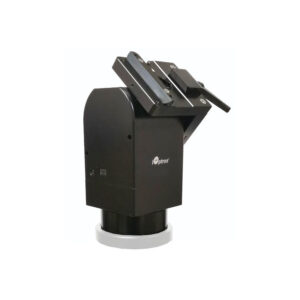
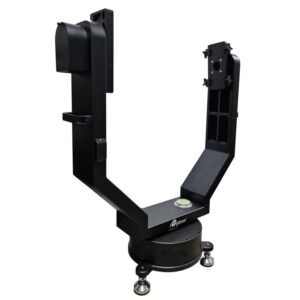
Showing 1–12 of 30 resultsSorted by popularity
The technology behind Harmonic Drive mounts
Harmonic Drive mounts, or strain wave gear mounts, use a drive mechanism that is fundamentally different from the traditional worm gear transmission. Instead of a rigid gear that engages a worm, a flexible ring deformed by an elliptical axis is used. This technique, originally developed for robotics and aerospace, offers specific advantages for the mobile astrophotographer.
High power-to-weight ratio
The most noticeable feature of a harmonic drive mount is the lack of counterweights in lighter and medium-weight setups. Thanks to the high torque of the Strain wave transmission, a mount of only a few pounds can carry a telescope that is many times its own weight. This makes these systems the standard for photographers who travel or need to frequently move their setup to locations with less light pollution.
No backslash and direct link
Because the teeth in a harmonic drive system interlock over a large area, there is virtually no mechanical backlash (backlash). With traditional mounts, this can be a problem during guiding, especially when reversing the direction of motion on the declination axis. With a harmonic drive mount, the system responds directly to corrections from the guiding software.
Periodic Error and auto guiding
One feature of harmonic drive systems is a relatively large, but highly predictable periodic error (Periodic Error). Whereas a traditional mount can sometimes be used without guiding, auto guiding on a harmonic drive mount is necessary for shots with longer exposure times. Because of the smooth curve of the error, modern software can effectively correct these deviations, resulting in round stars all over the shot.
Maintenance-free design
The mechanics of a Strain wave mount is virtually impervious to temperature fluctuations and wear that can occur with worm gears over time. No axes need to be balanced as with German equatorial mounts, which significantly reduces set-up time.
 Dutch
Dutch English