
Filter Wheels & Holders
Showing 1–12 of 13 resultsSorted by popularity
Showing 1–12 of 13 resultsSorted by popularity
Filters and filter wheels: mastery of light
Anyone looking through a telescope for the first time is often overwhelmed by the brightness of the moon or the subtle shades of gray of a distant nebula. But as you observe more often, you discover that sometimes the human eye and camera need a little help to really bring out details. This is where filters and filter wheels become indispensable. They are the ultimate tools for blocking disturbing light and specifically letting through the light that reveals the details of planets, nebulae and galaxies.
At telescoop.nl, we consider filters to be the most cost-effective upgrade for your instrument. With the right filters a modest telescope in a light-polluted city sometimes performs better than a huge scope without filters. In this comprehensive guide, we explain how to choose the right filter and how a filter wheel can automate your workflow.
Why do you need filters?
In astronomy, we are constantly fighting two major enemies: the overwhelming brightness of nearby objects (such as the moon) and the distracting glow of artificial light (light pollution). Filters work by selectively blocking certain wavelengths of light.
Contrast enhancement: By darkening the background sky, nebulae and galaxies ‘pop out’ much more clearly.
Detail recognition: On planets such as jupiter and mars, specific color filters can make visible subtle bands of clouds or polar caps that otherwise disappear in the bright white of the planet.
Protection: Some filters protect your eyes (such as sunscreens) or your equipment from unwanted UV and ir radiation.
The different categories of filters
Within our product range filters and filter wheels we distinguish between visual filters and photographic filters.
1. Moon filters and variable polarization filters.
The moon is often so bright that observing it can be painful to the eye. A moon filter acts like sunglasses and reduces glare. A variable polarization filter is the deluxe version: by turning the filter, you can infinitely adjust the light transmission according to the phase of the moon and the size of your telescope.
2. Deep-sky filters (UHC and OIII).
These filters are the salvation for the deep-sky observer. A uhc-filter (ultra high contrast) blocks the wavelengths of lampposts (mercury and sodium lamps) but allows the light from nebulae to pass through. A oiii-filter is even more specific and allows only the light from ionized oxygen to pass through. This is the ’magic filter’ for objects such as the veil nebula.
3. Planetary color filters
By using specific colors (red, orange, blue, green) you can enhance the details on planets. For example, a red filter is great for bringing out the textures on mars, while a blue filter enhances the subtle details in the clouds of jupiter and saturn.
Astrophotography: the world of narrowband and LRGB
For the photographer are filters not an option, but a requirement. When working with a monochrome astro-camera, you need filters to create a color image at all.
LRGB sets: You take separate shots in luminance (black and white detail), red, green and blue. Putting these together in post-processing creates a color photo with much more detail and less noise than a standard camera shot.
Narrowband filters (Ha, OIII, SII): These are the filters for the advanced photographer. They let through only very specific wavelengths of hydrogen (h-alpha), oxygen and sulfur. With these you can take breathtaking pictures of nebulae (the famous hubble palette colors) even during a full moon or in the middle of the city.
The usefulness of a filter wheel
If you're working with multiple filters, you don't want to be constantly manually screwing them in and out of your telescope. This is where the filter wheel into the picture.
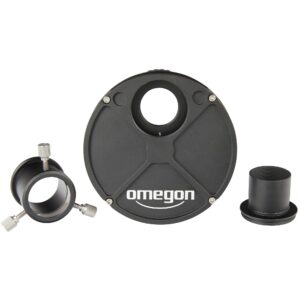
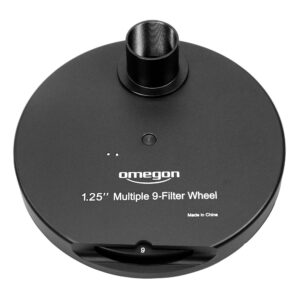
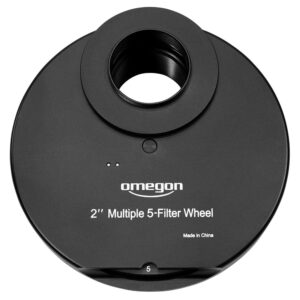
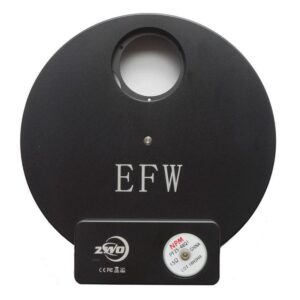
Manual filter wheels: Ideal for visual use. You easily click from one filter to another without removing your eyepiece.
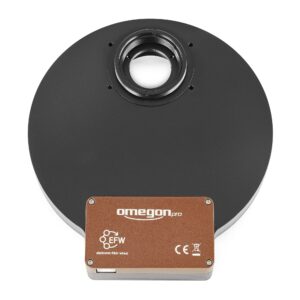
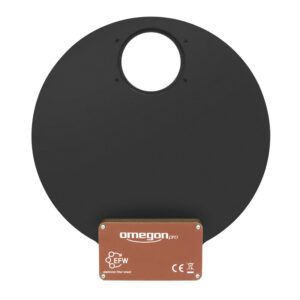
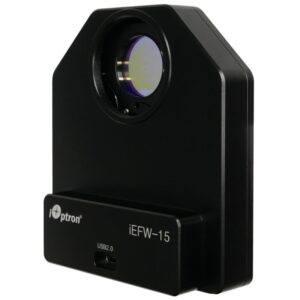
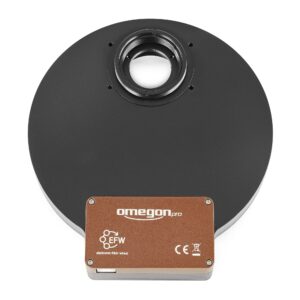
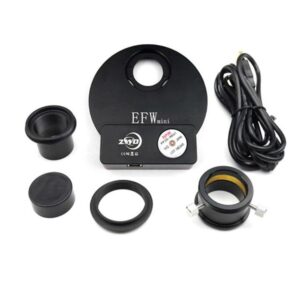
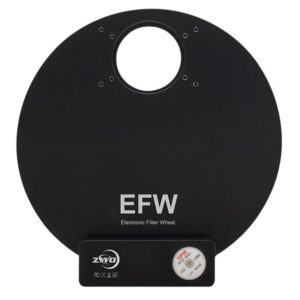
Electronic filter wheels (EFW): The standard for astrophotography. These are controlled by your computer. Your software automatically switches between red, green and blue during the night while you can stay in. Our filter wheels from brands like zwo are built extremely thin so as not to compromise the back focus of your system.
Frequently asked questions about filters and filter wheels
Will every filter fit every eyepiece? Filters are standardized. There are two sizes: 1.25-inch and 2-inch. Almost every eyepiece has a thread on the bottom that these filters fit into. When purchasing a filter wheel note that the size of your filters matches the carousel in the wheel.
Do filters also help against the new LED lampposts? This is a challenge. The old filters were designed for sodium lamps (which emit a specific color). LED lighting is ‘broadband. Fortunately, there are modern ’light pollution suppression‘ (lps) filters that are also effective against LED lighting by filtering out the most interfering peaks.
Is an OIII filter also suitable for a small telescope? Because an oiii filter blocks a lot of light, you need a telescope with a reasonable aperture (100-120 mm and up) to keep the image from being too dark. For smaller telescopes, an uhc filter is often a better all-around choice.
Why buy filters from telescoop.nl?
At telescoop.nl, we understand the optical properties of each filter in our range. We know which filters work best with your specific telescope and from your observing location. Whether you're looking for an affordable moon filter or a professional set of 2-inch narrowband filters, we have the right match.
We offer:
Quality assurance: Filters with high-quality coatings for maximum light transmission.
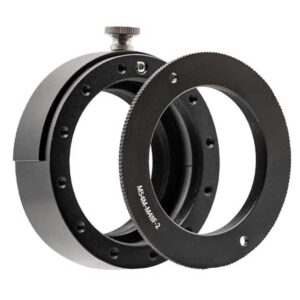
Compatibility: We will advise you on the right adapters to fit your filter wheel seamlessly connect to your camera and flattener.
Prompt delivery: Ordered before 11:59 p.m. often means you can experience the difference in contrast within 48 hours.
Enhance your visual experience or take your astrophotography to a professional level. Discover the power of light control and choose the filters that make your window on the universe brighter than ever.
 Dutch
Dutch English