
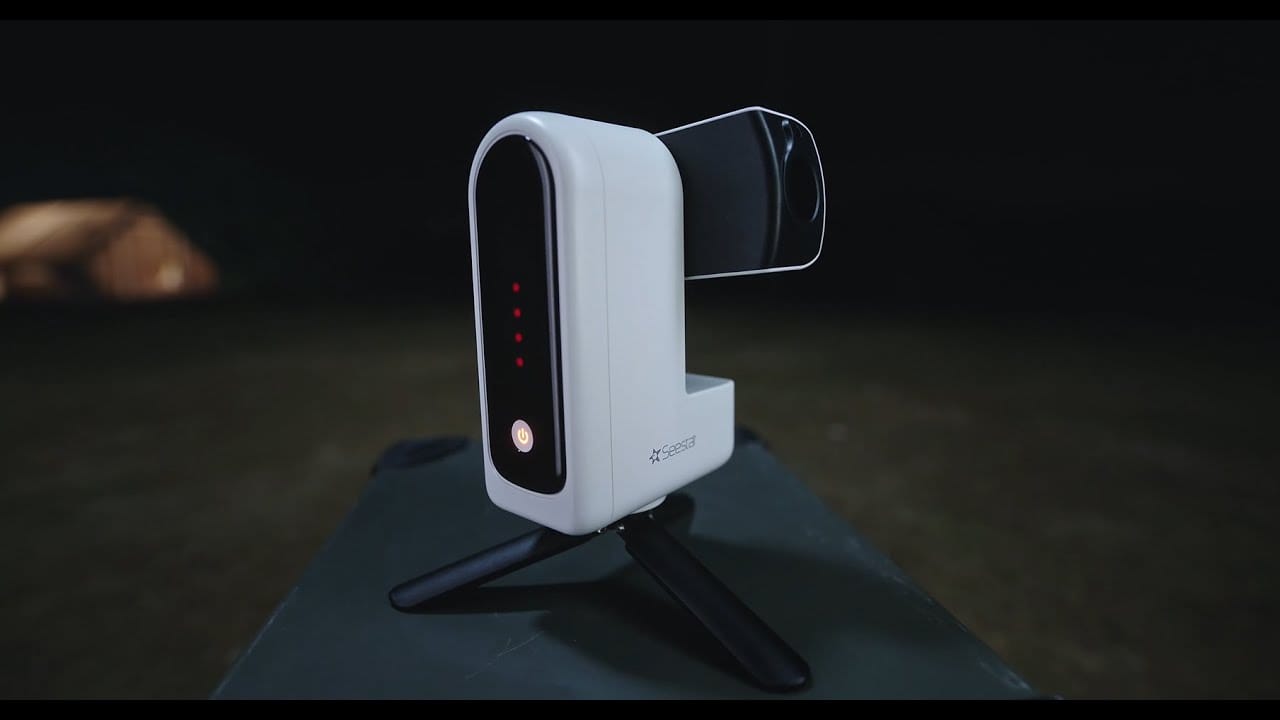
Seestar S30 vs. S50: The Seestar S50 set a new standard for smart telescopes in 2023. When ZWO subsequently came out with the cheaper Seestar S30, many thought, “Is this just a slimmed-down version or is there more behind it?” In this comprehensive comparison, we dive into the technical differences, image quality and real user experiences. Whether you want to capture the Moon or view nebulae in detail, this will help you choose.
Seestar S30 vs. Seestar S50: The real difference starts with the lens
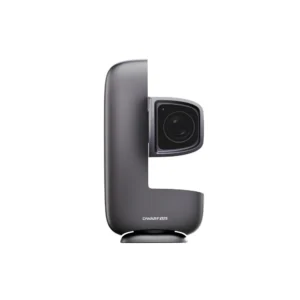
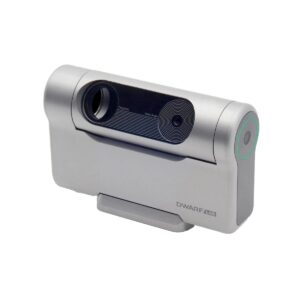
The most important feature of a telescope is its opening (the diameter of the lens). The Seestar S30 has a 30 mm lens and the Seestar S50 Has a lens of 50 mm.
That sounds like a small difference, but optically it's big. A larger lens captures more light. More light means:
more detail
better contrast
better performance when it is a little foggy or when looking around town
There is something in return. The S30 has a shorter focal length than the S50. That means it has a broader view shows. Consider the difference between a wide-angle lens and a zoom lens on your camera.
You can remember it this way:
S30 = broader view
S50 = more detail
The difference of the Seestar S30 vs. Seestar S50 in practice: What do you notice?
This is where many comparisons get too technical. Let's keep it practical.
With the Seestar S30 see large objects more easily at once. The Andromeda Nebula fits comfortably into view. The Orion Nebula looks spacious and uncluttered. Star fields feel “open.” You don't have to slide or use mosaics as much.
With the Seestar S50 you see the same objects, but closer. You see more structure in the nebula, more sharpness in star clusters and clearer contrast differences on the Moon. Sometimes an object may not fit all at once, but what you see is richer in detail.
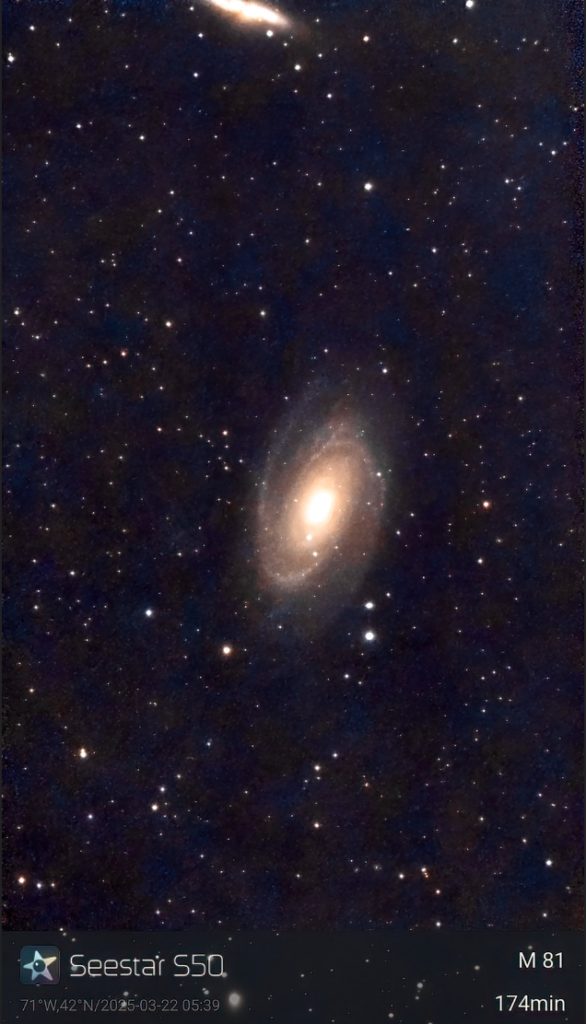
Below are two examples of M31 Andromeda Galaxy:
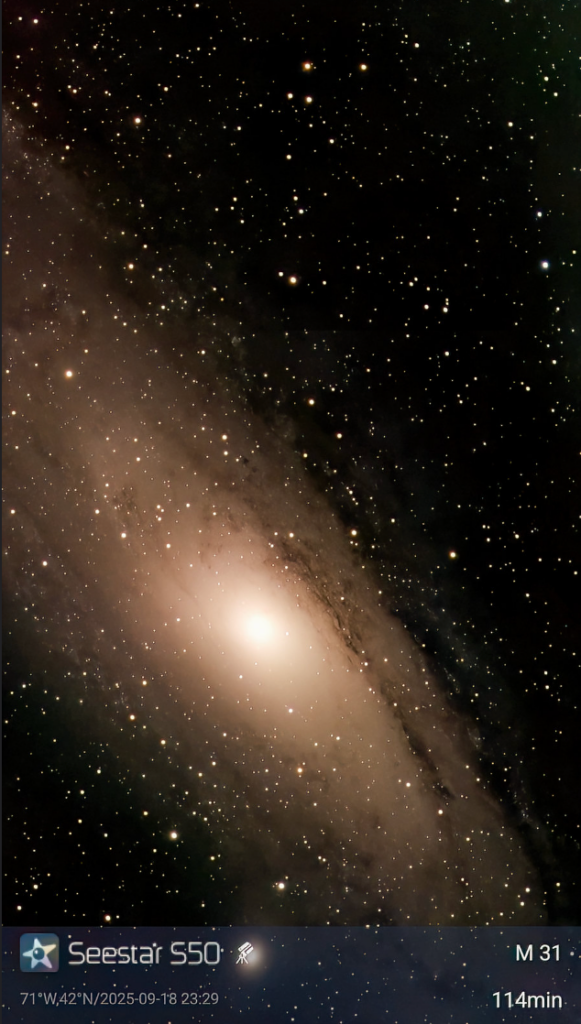
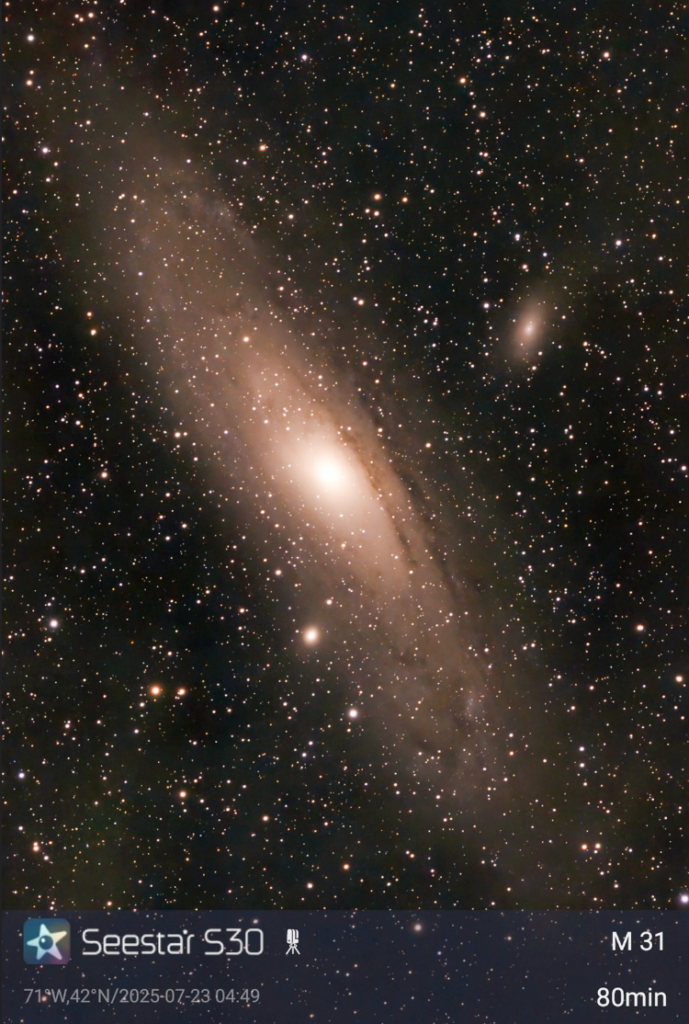
As you can see, the Seestar S50 further zoomed in on Andromeda. You look more toward the heart of the galaxy. The nucleus is larger in focus and stands out more clearly, and the darker orbits around it appear quieter and sharper. The image feels a bit “closer.” You see less of the outer edges, but what you see looks tighter and with more contrast, especially if the telescope can continue to stack quietly for a while.
The Seestar S30 actually shows more of Andromeda at once. The galaxy fills the image wider and you get a better sense of how big it actually is. The core is smaller, but the whole thing looks spacious and uncluttered. This feels less like zooming in and more like looking at the object as a whole.
It helps to compare this to photography. The S50 acts like a light zoom: you bring a part closer and see more detail there. The S30 is more like a wide angle: you see more surroundings, but each part is slightly smaller in focus. Neither is better; it's simply a different way of looking at things.
In practice, you notice this immediately. With the S30, you almost never have to think about whether Andromeda will fit in the picture, it just does.
With the S50 you choose more consciously: do you want to see mainly the center, or are you going to use a mosaic to capture everything? That takes a little more time, but can also be fun if you want to spend a little longer with one object.
Which one you like better depends on what you expect from an evening of stargazing!
Seestar S30 vs. S50 sensor: newer is not always better
The S30 uses a newer image sensor than the S50. That sounds like it's automatically better, but that's not quite how optics work.
A modern sensor helps with noise and efficiency, but light remains more important than electronics. And that is where the larger lens of the S50 often wins out.
In practice, this means:
they do not differ much from each other under good conditions
In less ideal conditions (city, light pollution), the S50 retains detail more often
There you have fortunately filters For that solve that.
Deep-sky: what do they both excel at?
Both telescopes are made for deep-sky astrophotography. Think nebulae, star clusters and large galaxy objects.
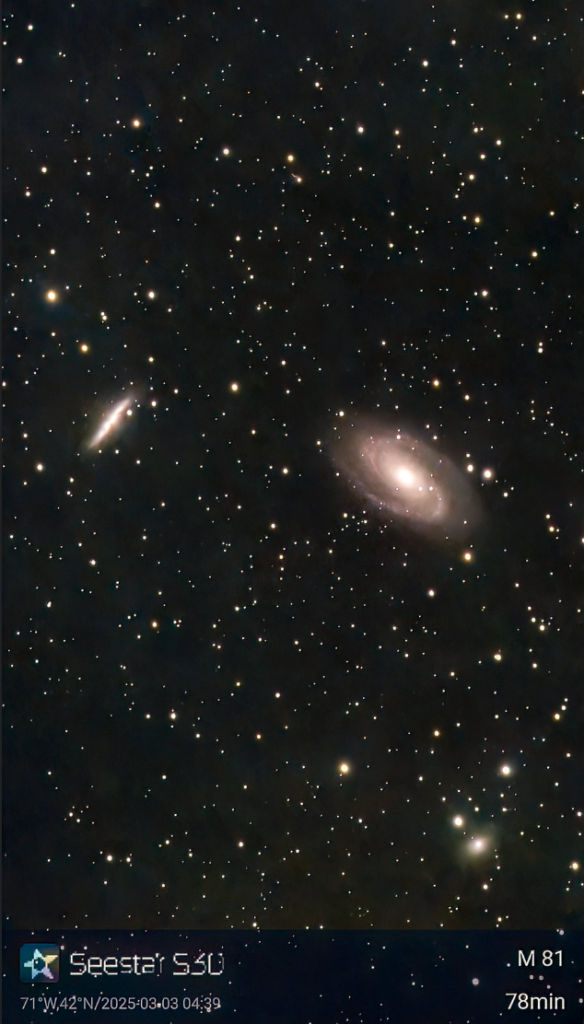
This is where the S30 feels surprisingly strong. The wide image gives you a “wow picture” quickly, even if you have little experience. Many people find this more motivating than a technically perfect but tight image.
The S50 shows more structure here. The background is quieter, bright areas come off better, and stars tend to be a little tighter. You can see this especially if you let images stack longer.
Sun and Moon: both excellent, but different
For sun and moon observation, both models are quite suitable. The solar filters are included as standard and are safe to use.
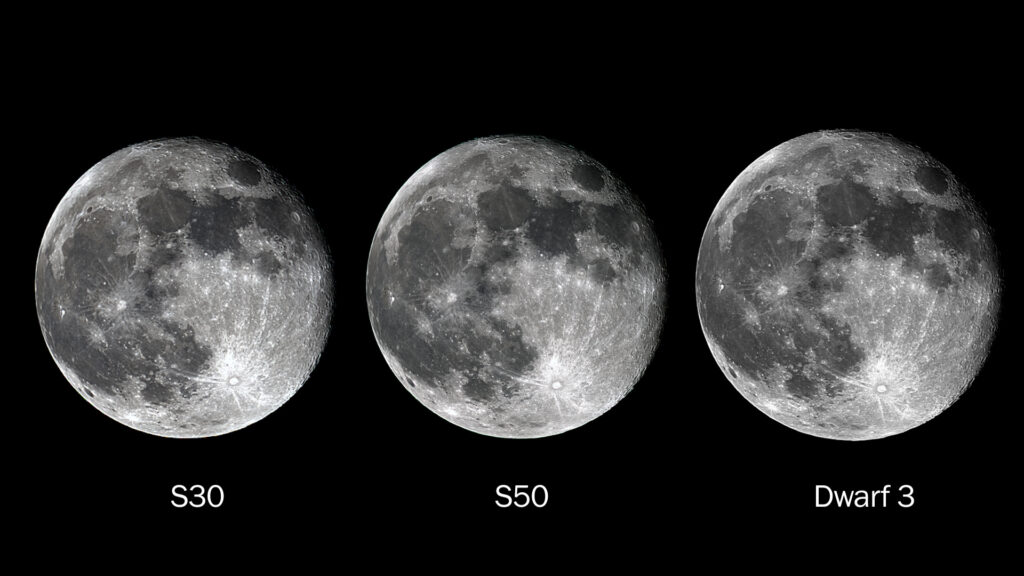
The Moon shows beautiful craters and shadows with both telescopes.
Yet you can see a difference:
the S30 shows the Moon as a whole very pleasant
the S50 shows more detail in craters, edges and shadow structures
If you are primarily interested in lunar structures, the S50 visibly wins out.
Seestar S30 vs. Seestar S50: can you see planets with it?
Planets are certainly fun to try with both Seestar models, especially if you find it interesting to post-process images later. It's just good to know that these telescopes are primarily designed for deep-sky objects such as nebulae and galaxies, and not specifically for planets.
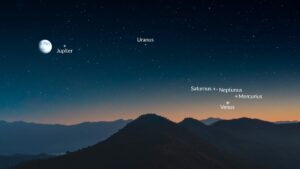
With the Seestar S30 you can clearly see planets such as Jupiter and Saturn as recognizable objects. Jupiter appears with its moons and Saturn as a compact, bright point. With some post-processing, you can get surprisingly nice results from this, especially given the compact size of the telescope.
The Seestar S50 gives you a little more latitude. Because of the larger aperture and longer focal length, planets come into view just a bit larger and quieter. Under good conditions, and with some post-processing, the rings of Saturn are very faintly visible. Jupiter is very overexposed, so you will have to play with post-processing to get it visible in the picture.
It remains no planetary specialist, but for those who enjoy experimenting with planets in addition to deep-sky, the S50 offers just that extra bit of margin.
In short: planets are a nice addition and certainly possible with both models, especially if you like post-processing!
Ease of use: here they are equal
In terms of operation, they are practically identical. Everything goes through the same app.
You have automatic focus, automatic object recognition, live stacking and the ability to share images with others watching.
Battery life is similar (about an evening of observing) and both are light enough to carry around without difficulty. The S30 feels slightly handier, the S50 slightly sturdier.
Which one should you choose?
Ask yourself these simple questions:
Do I especially want large objects in one image and quick results? → S30
Will I more detail and sharpness even when the light is not perfect? → S50
Am I mainly looking at nebulae and star fields? → S30
Do I think the Moon and planets are more important? → S50
Seestar S30 vs Seestar S50: our conclusion
The Seestar S30 vs. S50 is not about better or worse, but about your personal preference. The S30 is approachable, wide and forgiving. The S50 requires a little more attention when framing, but rewards you with more detail.
Both do exactly what a smart telescope should do: help you capture the universe without technical barriers. Whichever one you choose, you'll be looking at real deep-sky objects the same night, which is exactly why these telescopes are so popular.
If you want to see them side by side or order them directly, you can find both models at Telescoop.nl.


 Dutch
Dutch English