
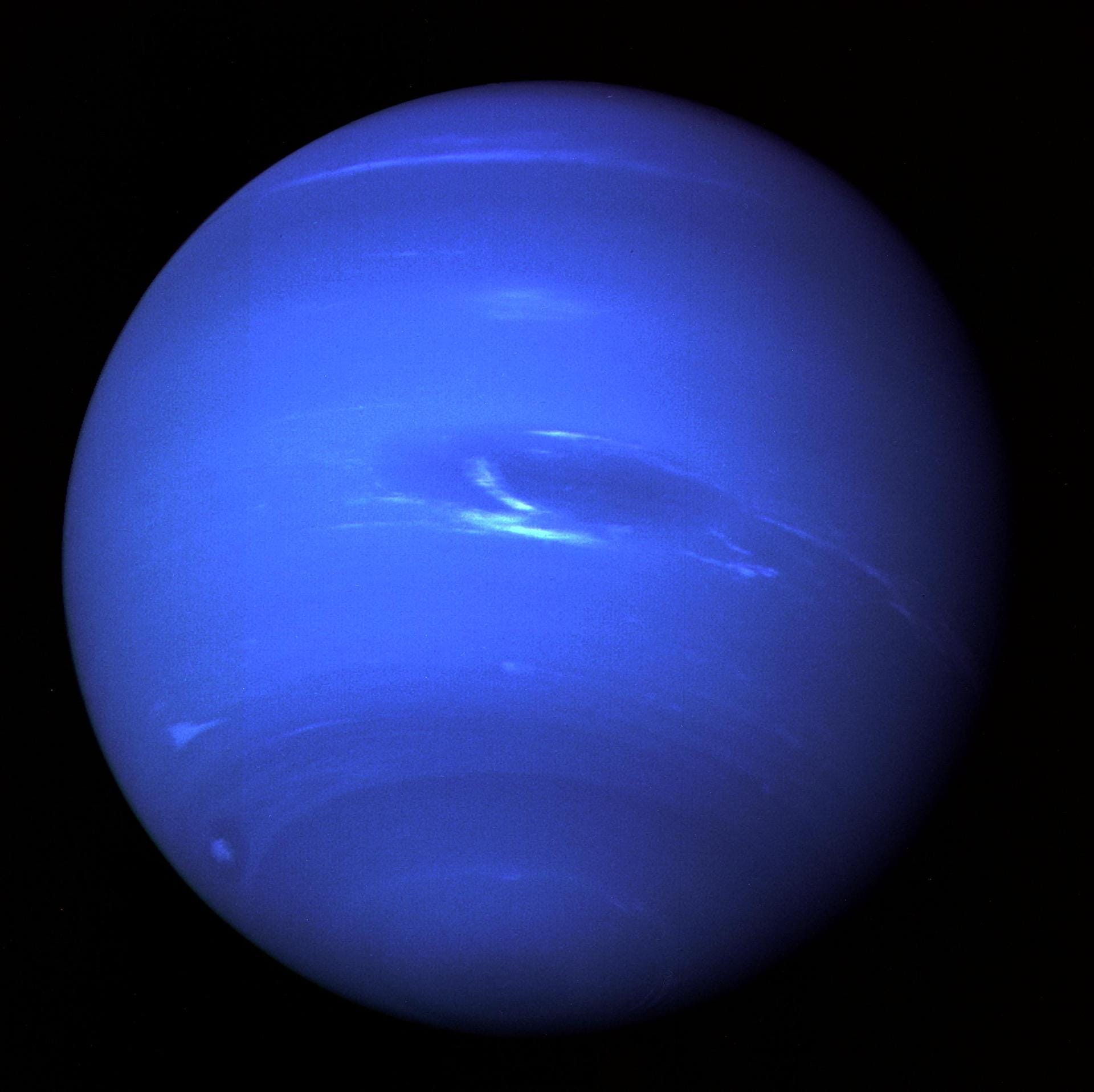
Neptune through a telescope viewing feels like seeing something not actually meant for the naked eye. This ice giant is so far from Earth that it barely stands out among the stars, and that is precisely what makes it special. Where Jupiter makes an immediate impression and Saturn welcomes you with its rings, Neptune remains quiet and reserved. Those who do manage to find it are looking at the farthest planet in our solar system.
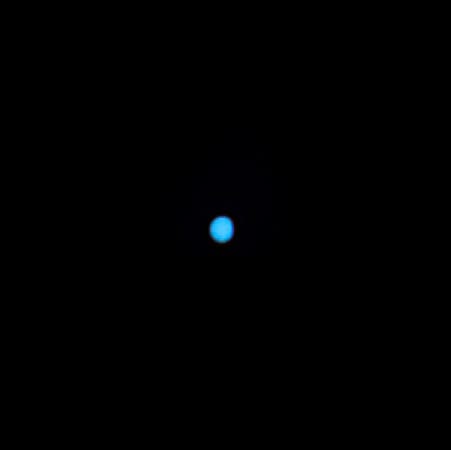
What do you see when you view Neptune through a telescope?
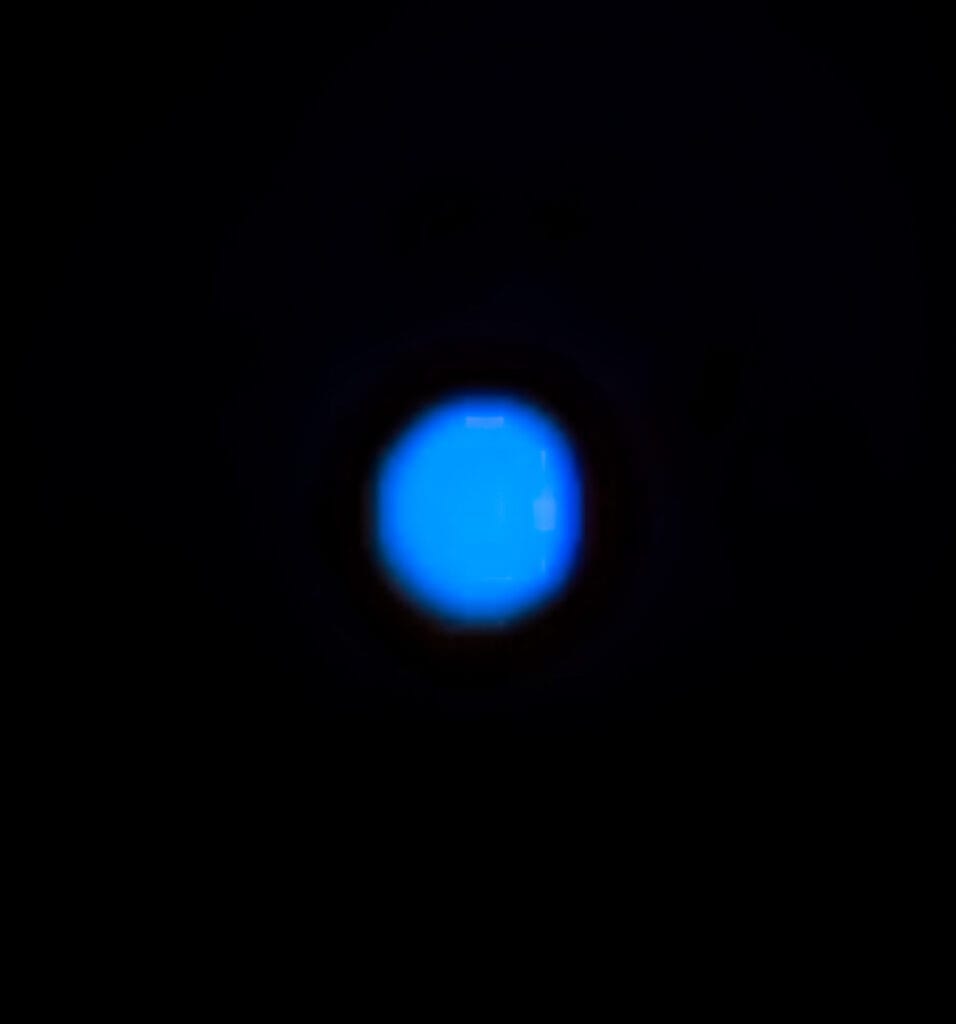
Neptune is small in the sky. Its apparent diameter is only about 2.4 arcseconds, which means it appears many times smaller than the Moon. Yet with sufficient magnification, it is clearly recognizable as a planet. Instead of a star-like point, you see a small, sharply outlined disk with a blue-green color.
That color is not an optical effect, but real. Methane gas in the atmosphere absorbs red light and lets mostly blue and green light through. As a result, Neptune looks cooler and darker than Uranus. The image otherwise remains calm and even. Do not expect obvious cloud structures or bands. Only with very large telescopes and under exceptionally good conditions can subtle variations in brightness be observed.
At sufficient aperture, you can sometimes see Triton, Neptune's largest moon. It then appears as a faint dot right next to the planet and is a nice challenge for experienced observers.
Can you see Neptune without a telescope?
Neptune is not visible to the naked eye. With a brightness around magnitude 7.8, it is simply too dim. Even under a perfectly dark sky, it remains invisible without an optical aid. With binoculars you can sometimes observe it as a point of light, but only with a telescope does it become clear that you are looking at a planet and not a star.
Neptune through a telescope: what telescope do you need to see Neptune?
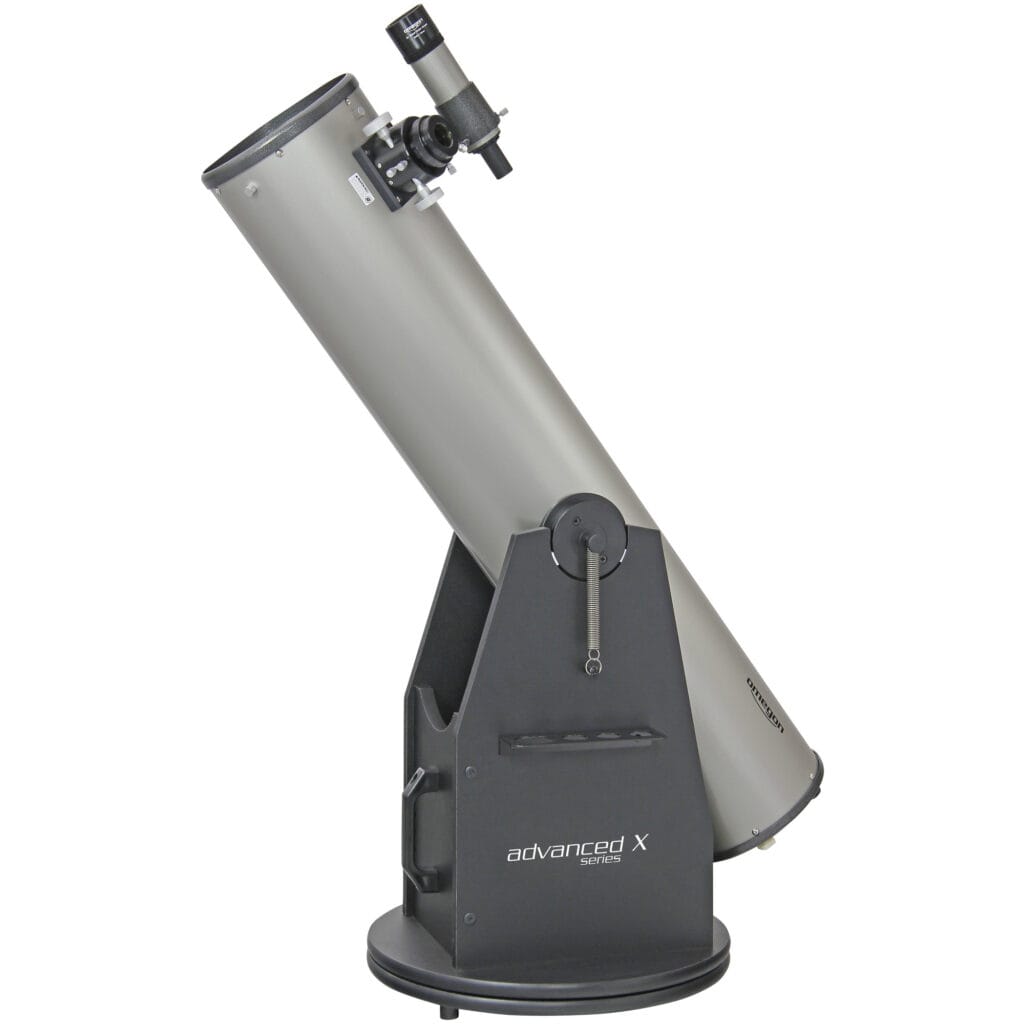
Neptune has higher requirements than Uranus. In practice, a telescope with an aperture of about 150 to 200 millimeters is the minimum to reliably distinguish its planetary disk. Larger telescopes make the image quieter and increase the chances of observing Triton.
Magnifications around 100 to 200 times are usually ideal, provided the air is calm. A stable mount is more important here than even more magnification. Because Neptune is so small, any oscillation will be immediately visible. A light blue or violet filter can sometimes help to increase contrast slightly, but don't expect a drastic change. Neptune remains a planet of subtlety.
Under perfect conditions and with very large telescopes, even its rings are faintly observable, but they reflect extremely little sunlight. For most observers, they remain out of reach, which is perfectly normal.
When is Neptune best visible through a telescope?
Neptune is best observed around its opposition. That is when it is directly opposite the sun and visible all night. During that period, it is highest in the sky and is at its brightest. Because Neptune takes over 165 years to make one orbit around the sun, its position slowly shifts through the constellations.
A dark, moonless night and a location with as little light pollution as possible make a big difference here. Without tools, Neptune is virtually indistinguishable from stars, so a star chart or planetarium app is essential to finding him reliable.
What should you pay attention to while observing?
Finding Neptune requires patience. Always start with low magnification to identify the correct star field. Once you are sure you have the right object in view, you can slowly increase the magnification until the disc becomes clearly visible. Let your telescope cool sufficiently and take your time. Atmospheric turmoil may cause the image to blur temporarily, but quiet moments often produce a sharp image all of a sudden.
Tracking Neptune over several nights can help. Its slow motion relative to the stars makes it easier to identify and gives extra satisfaction once you recognize it.
Neptune through a telescope: our opinion
Viewing Neptune through a telescope is not a spectacle, but a quiet victory. You won't see bright rings or dramatic storms, but a small, icy world nearly 4.5 billion kilometers away. With a telescope of sufficient aperture, a dark sky and realistic expectations, Neptune becomes a special observation you won't soon forget.
Those who want to see this planet do not choose just any telescope, but an instrument that combines stability, light output and comfort. A focused selection guide helps to make the right trade-off in this and get the most out of this kind of challenging object.

 Dutch
Dutch English