
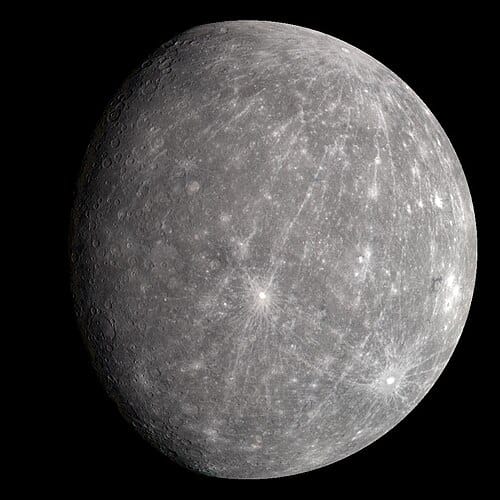
Mercury through a telescope viewing is possible, but requires more preparation than for almost any other planet. Mercury is always close to the sun and is therefore visible only briefly, low above the horizon and often surrounded by twilight. This makes it tricky, but also just as special. Those who have properly observed Mercury once know that it was not a fluke, but the result of timing and patience.
Can you see Mercury through a telescope?
Yes, Mercury can be seen with a telescope, but it is among the most difficult objects in the solar system to observe properly. The reason is its orbit. Mercury orbits closely around the sun and never gets far from it as seen from Earth. The maximum distance it can be in the sky from the sun is what astronomers call the elongation, and it maxes out at about 28 degrees for Mercury.
That's little. By comparison, an extended fist measures about ten degrees in the sky. So Mercury is never more than a few fists away from the sun, making it visible only just after sunset or shortly before sunrise. The visibility window is small and disappears quickly.
What do you see when you view Mercury through a telescope?
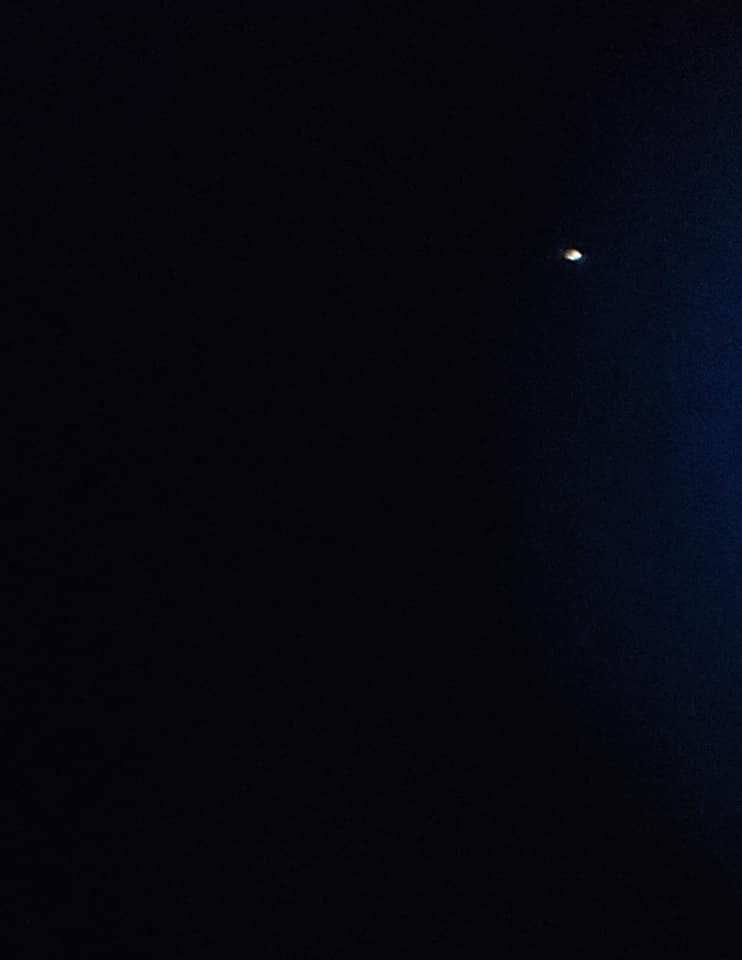
When you view Mercury through a telescope, you see a small, bright disk with a gray-brown hue. Like Venus, Mercury shows phases. Depending on its position, you see it as a thin crescent or as a half-lit disk. That phase difference is the most important thing Mercury has to offer visually.
The surface itself remains largely devoid of detail. This is not due to your telescope, but to the combination of its small apparent size and low position above the horizon. Under calm conditions, you can sometimes see subtle differences in brightness along the terminator, the transition between day and night on the planet, but don't expect craters or obvious structures.
Why is Mercury so hard to see sharply through a telescope?
The biggest challenge with Mercury is not the telescope, but the Earth's atmosphere. Because Mercury is low above the horizon, you are looking through a thick layer of air. That air is often turbulent, causing the image to vibrate or distort. Astronomers call this seeing: the degree to which the atmosphere disturbs the image.
Poor seeing makes fine details impossible, even with a large telescope. As a result, Mercury can look surprisingly sharp one day and completely unsettled the next, while using the exact same equipment.
Which telescope works best for Mercury?
Mercury makes relatively few demands on aperture, but all the more on stability and control. With a telescope of about 60 millimeters aperture, the phases are already visible, but a slightly larger aperture helps to keep the tiny disc quieter and sharper at higher magnification.
A stable mount is more important here than pure magnification power. You are working with short observing moments and low planetary positions, so any oscillation will be immediately visible. A telescope with a somewhat longer focal length makes it easier to get Mercury sufficiently large in focus without making the image unnecessarily unsettled.
Does a filter help with Mercury through a telescope?
A light yellow or orange filter can sometimes help to improve the contrast a bit, especially when Mercury is still at dusk. The filter attenuates the blue stray light from the sky, making the phase just a little more quietly visible. Don't expect spectacular gains, but sometimes it makes just the difference between a faint spot and a clear crescent.
Heavy nebula filters such as UHC or OIII are not suitable here. Those are designed for emission nebulae and add nothing for planets.
Can you see Mercury without a telescope?
Mercury is visible to the naked eye as a bright star low above the horizon, but only around moments of maximum elongation. Without an optical aid, it always remains a point of light, without phase or structure.
It is easier to find with binoculars, but caution is essential in doing so. Start only when the sun is completely down or has not yet risen, and never deliberately aim near the sun.
Safe observation remains important
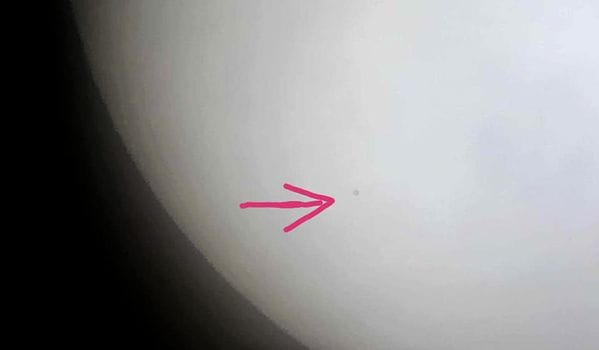
Because Mercury is always close to the sun, safety is especially important. Observe only when the sun is below the horizon and never attempt to track Mercury during the day without professional solar filters. During rare sun transits, when Mercury moves across the sun as a tiny black dot, special solar filters are mandatory.
Without those filters, observing is dangerous.
Mercury through a telescope: what do you really see?
With amateur telescopes, you can't see obvious surface details such as craters or mountains. That's normal. Mercury also has a relatively dark surface that reflects little sunlight, so it looks duller than Venus or the Moon.
Only under exceptionally good conditions are slight shadow lines visible along the terminator. For most observers, Mercury remains a planet of form, not detail.
Viewing Mercury through a telescope: our conclusion
Viewing Mercury through a telescope is not a quick victory, but an exercise in timing and realistic expectations. Don't expect spectacular detail, but do expect the distinct phase difference and the special feeling of having observed one of the hardest-to-see planets for yourself.
With a stable telescope, good preparation and a clear view of the horizon, Mercury is a valuable addition to your planetary observations. If you want to know which telescope is suitable for Mercury as well as other planets, a good buying guide will help you make targeted choices and avoid disappointment.

 Dutch
Dutch English