
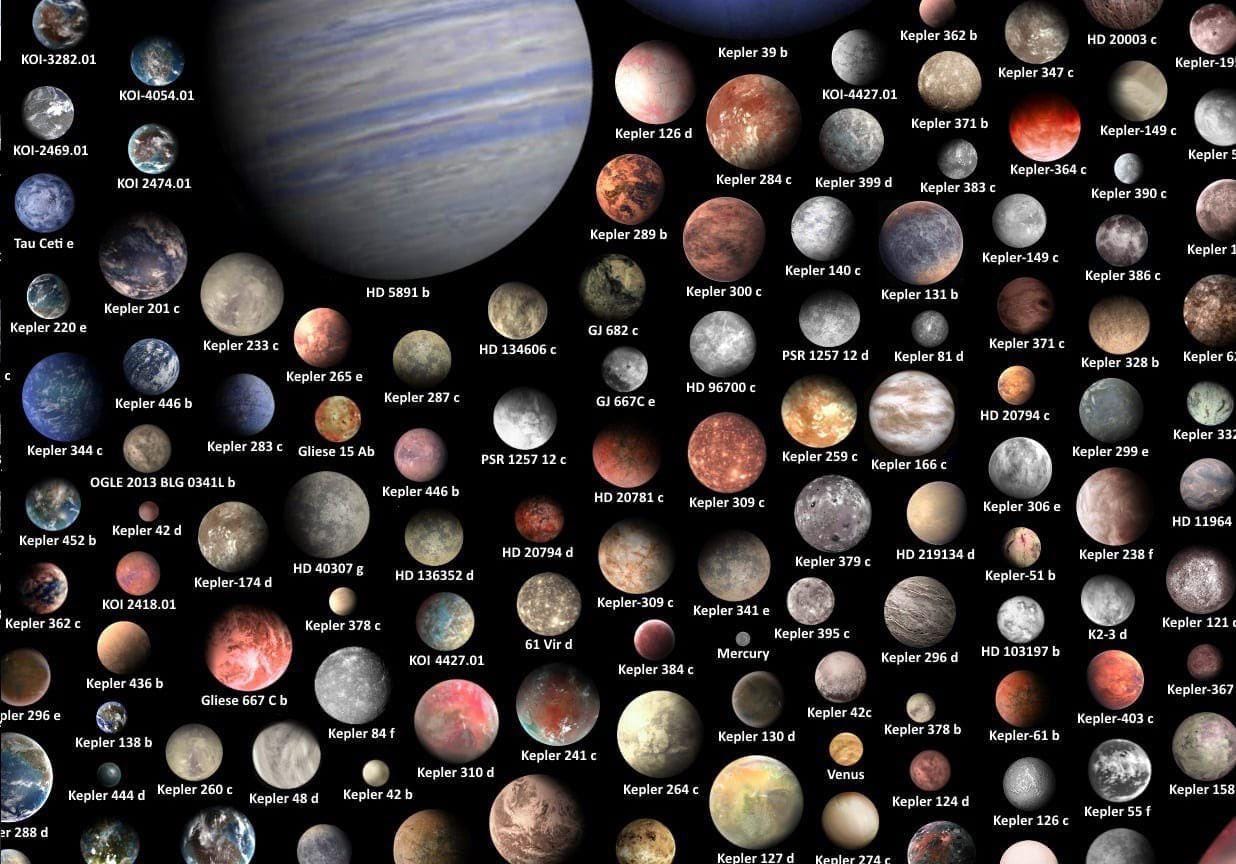
Exoplanets discovered: exoplanets are planets orbiting stars other than our sun. Until a few decades ago, their existence was purely theoretical. Today we know that they are everywhere. Indeed, almost every star in the sky probably has its own planetary system.
The first confirmed discovery of an exoplanet dates back to 1992, when astronomers Aleksander Wolszczan and Dale Frail discovered two planets around a pulsar. This was followed in 1995 by the first exoplanet around a sun-like star: 51 Pegasi b. That was the beginning of a true revolution in astronomy.
Exoplanets discovered: how many exoplanets are there?
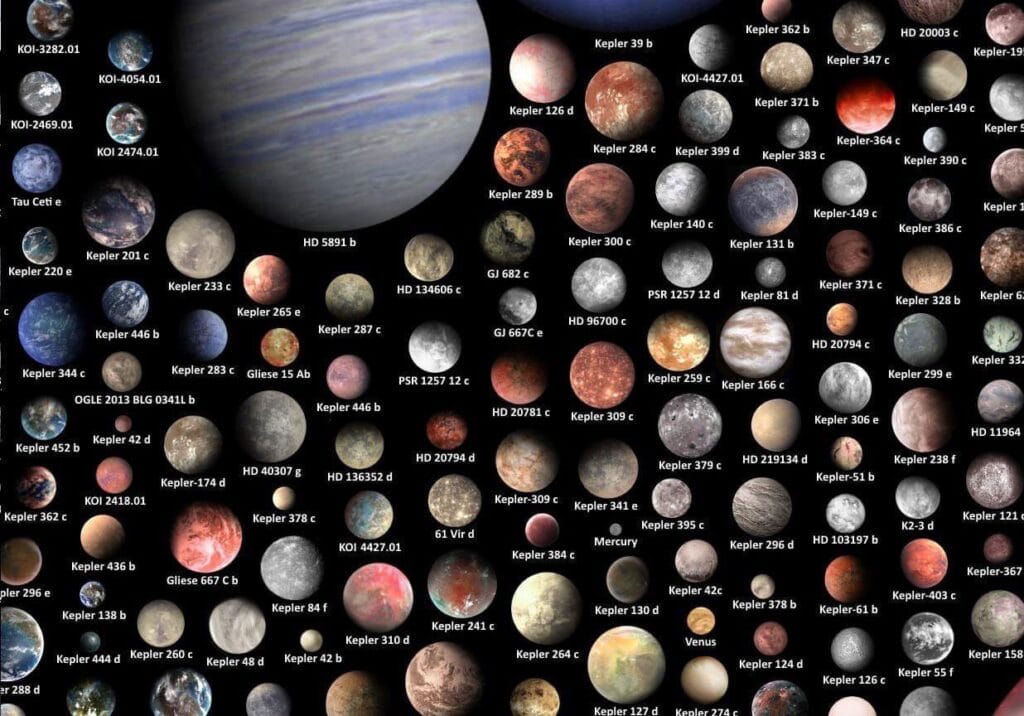
According to the latest figures, there are now more than 5,500 confirmed exoplanets found scattered across thousands of stars. And those are just the confirmed ones. Astronomers estimate that in the Milky Way alone there are hundreds of billions are planets - more than stars. That means planets are the rule rather than the exception.
Most exoplanets have been found using space observatories such as NASA's Kepler- and TESS-missions. These telescopes scan the sky looking for starlight that dims briefly when a planet moves past it. This technique, called transit photometry, is responsible for most of the discoveries.
What are the 5,000 exoplanets?
Those thousands of exoplanets are vastly different from one another. Some are gas giants larger than Jupiter, others are compact rocky worlds like Earth. Astronomers have even found planets that orbit their star in just a few hours, or planets orbiting two stars like in science fiction movies.
What this diversity shows is that planet formation is a universal process - but with myriad outcomes. Some planets look nothing like anything we know in our own solar system. That's what makes studying exoplanets so exciting: each discovery can yield something unexpected.
What is the habitable zone and how many planets are in it?
In the search for extraterrestrial life, scientists focus mainly on exoplanets in the so-called habitable zone - the distance from a star where liquid water can exist on the surface of a planet. Water is considered essential for life as we know it.
So far, there are more than 60 exoplanets found that are in such a habitable zone. This does not automatically mean that they are habitable, because factors such as an atmosphere, magnetic field, and star activity also play a major role. But they are the best places to investigate further.
What is the most promising exoplanet?
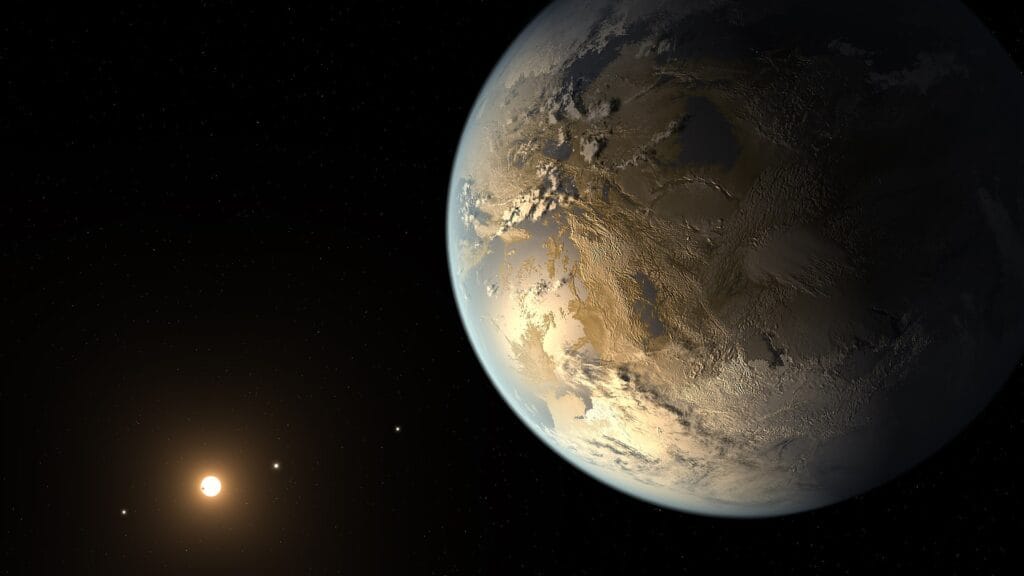
Several exoplanets stand out because of their potential for life. One of the best known is Kepler-186f - a rocky planet in the habitable zone of a red dwarf star, about 500 light years from Earth. It is only slightly larger than our planet and represents one of the first truly ‘Earth-like’ discoveries.
Another well-known candidate is K2-18b, a so-called super-earth with signs of water vapor in the atmosphere. And then there is Proxima Centauri b - the nearest exoplanet, just 4.24 light years away. It orbits in the habitable zone of our neighboring star Proxima Centauri, although its habitability may be limited by the active and radiation-rich nature of that star.
Kepler-186f:
The first Earth-like exoplanet found in its star's habitable zone.
Features:
- Distance to Star: Kepler-186f orbits a red dwarf star about 500 light years from Earth. It is in the habitable zone of its star, where temperatures may be suitable for liquid water.
- Size: Kepler-186f is only 10% larger than Earth, meaning it is probably a rocky planet.
- Composition: Although there are no direct measurements of its composition yet, scientists suspect it may have a dense atmosphere similar to Earth's.
- Livability: Its presence in the habitable zone and its size make it a strong candidate for Earth-like conditions and possible life.
Proxima Centauri b
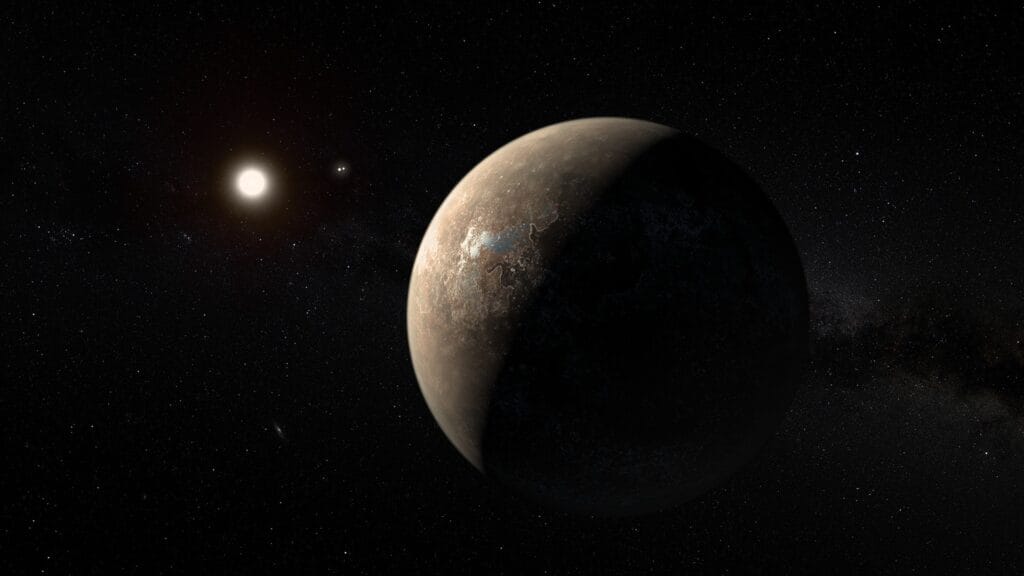
- Nearest exoplanet (4.24 light years).
- Orbits around Proxima Centauri, our neighboring star.
- Possibly habitable, although the star is very active.
What is the weirdest exoplanet?
Some exoplanets are downright bizarre. Consider a planet where it rains metal (WASP-76b), or a world like HD 189733b, where storms race at speeds of 8,000 mph and glassy sand flies horizontally through the atmosphere. There are even planets of pure diamond or starless planets floating in the void of space.
These extreme worlds teach us that the universe is more creative than we could ever imagine.
How are exoplanets discovered?
Exoplanets are usually not seen directly, but indirectly observed through smart measurement methods. The two most commonly used techniques are:
- Transitive photometry: This involves looking at small decreases in a star's brightness when a planet moves in front of it. This is the most popular and successful method to date.
- Radial velocity method: It measures the subtle ‘wobbles’ in a star's motion caused by the gravity of a planet orbiting it.
Other methods include gravitational microlensing (in which light from a background star is temporarily amplified by a planet's gravity) and direct imaging, sometimes using powerful telescopes to directly capture a planet.
Thanks to these techniques, thousands of exoplanets have now been identified - and the number is growing daily.
The future of exoplanet research
With the advent of the James Webb Space Telescope we are able for the first time to analyze in detail the atmospheres of some exoplanets. Scientists are looking for biosignatures such as oxygen, methane and carbon dioxide - substances that are partly the result of life on Earth.
Each new discovery brings us one step closer to answering one of science's biggest questions: Are we alone in the universe?






 Dutch
Dutch English