
Newton reflectors
Showing 145–156 of 165 resultsSorted by popularity
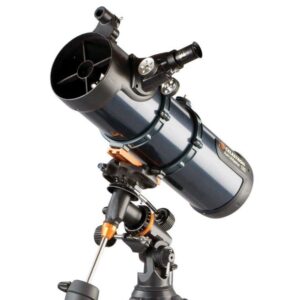
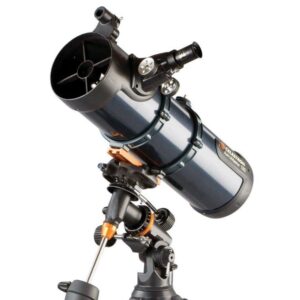
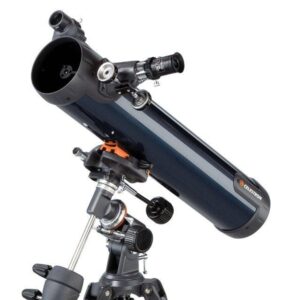
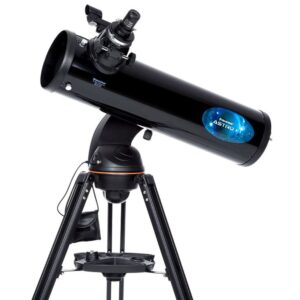
Showing 145–156 of 165 resultsSorted by popularity
Newton Reflectors: the most opening for your money
In the world of astronomy, there is one fundamental truth: light is everything. The more light you collect, the deeper you look into the universe. For those seeking the most “opening for their money,” the Newton reflector the undisputed king. While refractors (lens telescopes) are wonderful for contrast, at larger diameters they often offer a prohibitive price tag. The Newton reflector circumvents this problem by using mirrors, making enormous light-gathering powers accessible to any hobbyist.
On this page, we dive deep into mirror telescope technology, explain why the parabolic mirror is the standard, and give honest, expert-driven advice on which Newton reflector you have to choose based on your budget and situation.
Why the Newton Reflector is the Specialist's Favorite
The design of the Newton reflector is based on a concept by Sir Isaac Newton. Light enters the tube, reflects against a primary mirror at the back, and is directed to the side of the tube via a small secondary mirror. This provides three crucial advantages that you won't find in any other system in this price range:
Color purity: Because mirrors reflect light rather than refract it, a Newton reflector zero chromatic aberration (color fringing). This ensures a true-to-life image of planets and stars.
Light intensity: Due to the large mirrors are Newton reflectors often “fast” telescopes (low f-value). This means they collect a lot of light in a short time, which is essential for observing faint nebulae.
Ergonomics: In large telescopes, the eyepiece is on the side/upper side of the tube. This eliminates the need to crawl on the ground to look straight up, which is often the case with long refractors.
Our advice: Choose the right Newtonian for your night
The range of Newton reflectors can be overwhelming. As specialists, however, we follow a simple but effective rule of thumb: Always choose the largest Dobson within your budget. Why? Because at a Newton reflector every extra millimeter of mirror diameter directly results in more visible detail in distant galaxies.
1. The Ultimate All-rounder: Omegon Dobson 203/1200
If you ask us about the best start in astronomy, we point directly to the Omegon 203/1200. This 8-inch Newton reflector is the absolute “sweet spot.”.
The Force: With a 203 mm mirror, you capture a whopping 78% more light than with a 150 mm model. This is the difference between seeing a fuzzy speck and actually recognizing the spiral arms in a galaxy.
The Balance Sheet: It is large enough for serious deep-sky observations, but still compact enough to fit in the back seat of an average car. For most astronomers, this is the telescope for life.
2. Too Big? Choose the Sky-Watcher Heritage Flextube
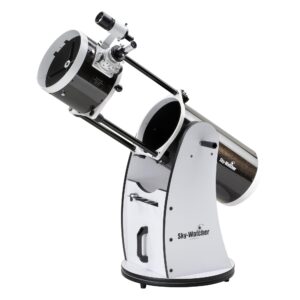
We understand that a 200 mm tube over a meter long is not practical for everyone. Do you live in an apartment or need to take the telescope with you in a packed vacation car? Then the Sky-Watcher Heritage series (130/650 or 150/750) your best friend.
Portability: Thanks to the Flextube design, you slide the tube in to almost half its length. It is a full Newton reflector that fits on a table.
Performance: Despite their compactness, they offer a parabolic mirror that renders the moon and major planets razor-sharp. It is the ultimate “grab-and-go” telescope.
3. For the Detail Hunter: GSO 200mm
Want to go one step further in mechanical precision? The GSO series lifts the Newton reflector design to the next level.
Expert Focus: Deluxe models are equipped with a 1:10 micro-focuser. At high magnifications on planets, focusing is extremely critical; with this delay, you can find the perfect focus where others keep looking.
Bearing system: The smooth bearing system ensures effortless manual tracking of objects even at 200x magnification.
4. Navigation aid: Celestron StarSense Explorer
Worried about losing your way in the starry sky? The Celestron StarSense Explorer 130mm or 150mm Newton reflector solves this with software. Your smartphone acts as your guide, telling you exactly how to move the telescope to get to your target.
The technique behind the mirror: What to look out for
When comparing Newton reflectors there are technical aspects that determine whether you are buying a quality instrument or an expensive toy.
Parabolic vs. Spherical: No Compromise
An inexpensive Newton reflector often uses a spherical (spherical) mirror because it is easier to produce. The downside? The light does not converge into a single point, leading to a blurred image (spherical aberration). We only sell telescopes with a parabolic mirror. This ensures that every photon that hits the mirror lands exactly in your eyepiece for a razor-sharp result.
Collimation: Tuning Your Instrument
A common “disadvantage” of the Newton reflector is that you have to collimate it. This is simply aligning the two mirrors. Think of it as tuning a guitar. Yes, it has to be done occasionally, but with a laser collimator, this is a two-minute operation that gets your telescope performing at 100% power again.
Astrophotography with a Newton Reflector
Although many people immediately think of a refractor for photography, a “fast” Newton reflector (f/4 or f/5) a light cannon for your camera.
Short exposure: Because of the large aperture, you collect data faster, which is essential for deep-sky objects.
Coma corrector: Because mirrors can produce slight distortion (coma) at the edges of the field of view, we always advise photographers to use a coma corrector. This results in pointy stars from corner to corner on your sensor.
Maintenance and Use Tips from the Specialist
To get the most out of your Newton reflector achieve, two things are crucial:
Cooling down (Acclimatization): A mirror must reach outdoor temperature to give stable images. Put your telescope outside at least 30 minutes beforehand. The air currents in the tube will disappear, allowing you to achieve much higher magnifications.
Cleaning: Almost never do this! A little dust on the mirror does not affect the image at all. Only if the mirror is really dull should it be carefully cleaned. We will be happy to advise you on this.
Why buy your telescope from Telescoop.nl?
The purchase of a Newton reflector is the beginning of a hobby that will stay with you for a lifetime. We not only offer the best brands such as Sky-Watcher, Omegon and GSO, but we are also there for you with advice based on practical experience.
Prompt delivery: Ordered before 11:59 p.m., delivered within 48 hours.
Controlled optics: We know which models perform.
Personal contact: Need help with your first collimation? We'll help.
Frequently asked questions about newton reflectors
Can I use a Newton during the day as well? It can be done, but the image is upside down and mirrored. For landscape observation, therefore, we are more likely to recommend a refractor, but for astronomy the Newton reflector unbeatable.
What accessories do I need right away? Start with a good moon filter and an extra eyepiece for high magnifications. A laser collimator is also a very wise investment to make your Newton reflector in top condition.
Are you ready to explore the depths of the universe? Check out our full range on the newton reflectors page and choose the power of the mirror!
 Dutch
Dutch English