
Dual EQ/Alt Az
Showing 13–15 of 15 resultsSorted by popularity
Showing 13–15 of 15 resultsSorted by popularity
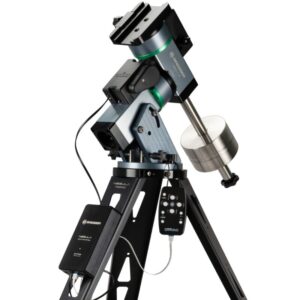
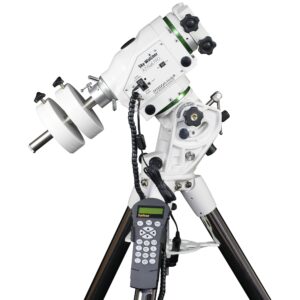
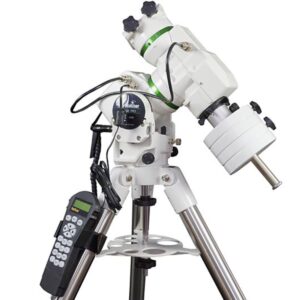
The versatility of Dual EQ/Alt-Az mounts
Dual mounts combine two different operating modes in one system: the Alt-Azimutal (Az) mode and the Equatorial (EQ) mode. For astronomers, this means a flexible setup that can be adapted to that night's specific task, whether for visual observation or astrophotography.
Alt-Az mode for visual use
In Alt-Azimutal mode, the mount moves along the horizontal and vertical axis. This is the most direct mode of observing. An advantage of a dual mount in this mode is that the telescope's eyepiece position often remains at a constant, accessible height. In addition, many of these systems in Az mode can carry two telescopes simultaneously (side-by-side), which is useful for comparative observing.
Equatorial mode for astrophotography
For shooting, the head of the mount is placed in the equatorial position. After polar alignment, the mount follows the starry sky along the polar axis, preventing image field rotation. This is necessary for exposure times of deep-sky objects. The dual mounts in our range are mechanically designed to match the stability in EQ mode to the requirements of photographic use.
Who is a Dual mount suitable for?
These mounts are often chosen by astronomers who:
Visual observations alternate with astrophotography.
Using different types of telescopes, such as an SCT for planets and an APO refractor for wide-field shots.
Find a system that uses the same GoTo control and database in both modes.
Technology and tracking
Dual EQ/Alt-Az mounts use motors and drives that keep objects in the field of view in both modes. They feature databases of tens of thousands of objects and support features such as autoguiding ports and PEC (Periodic Error Correction) to minimize mechanical aberrations during tracking.
 Dutch
Dutch English