
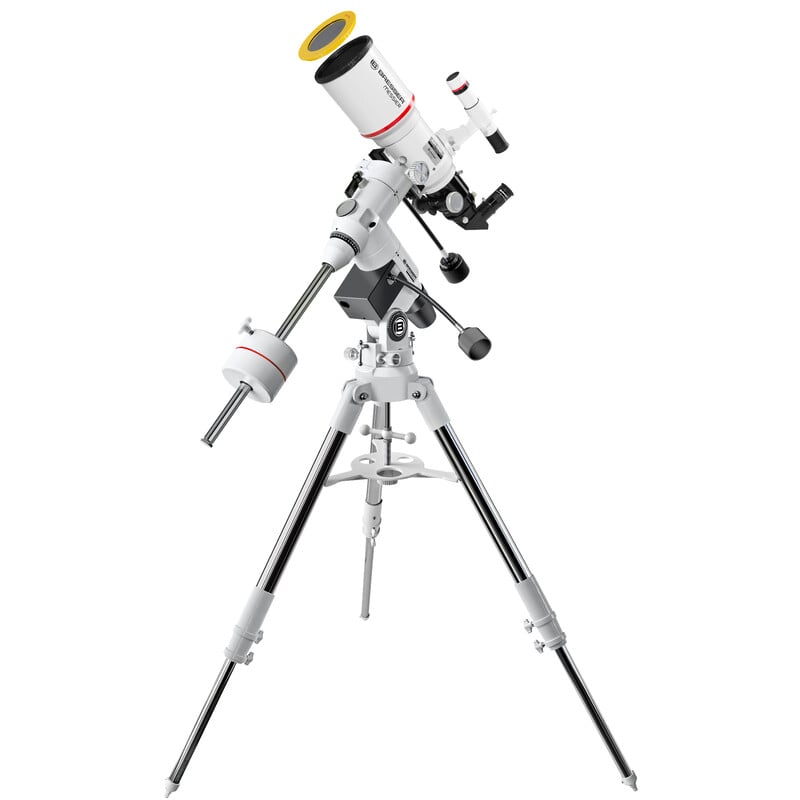
Frequently asked questions about telescopes: stargazing raises many questions. What do you see with a telescope? How do you use it? And which telescope is suitable for your purposes? In this comprehensive overview we answer the 29 most frequently asked questions, grouped by topic. So you can be sure you're off to a good start.
Basic questions about telescopes
Why do I only see black when I look through my eyepiece
This is the most frequently asked question. Check the caps first, but usually the culprit is the focus. Turn the focus knobs; an out of focus object is often invisible. Also, always start with your largest eyepiece (most millimeters) to make the search area as large as possible.
How do I align that little viewfinder on top of the telescope
If your viewfinder isn't positioned correctly, you'll never find anything. Do this during the day: point your telescope at a church steeple or a distant lamppost. Use the adjustment screws on the viewfinder until the crosshairs are exactly at the same point as what you see through your telescope.
Why does the image shake so much when I touch the telescope
This is often due to a tripod that is too light. In cheap telescopes, the tripod is the weak link. The solution is often a Dobson mount, where the telescope stands on a sturdy wooden base.
How do I simply calculate the magnification of my eyepiece
Magnification is not a property of the telescope, but of the combination. The math is simple: the focal length of your telescope divided by the number on your eyepiece. So a 1200 mm telescope with a 10 mm eyepiece gives 120x magnification.
What is the very best telescope under 300 euros
Without a doubt, this is the Omegon Dobson 152/1200. In this price range, you won't find anything with more aperture and stability. Where at other brands you pay for a rickety tripod, here you get a serious mirror that really catches light for planets and nebulae.
Why do nebulae look gray and not colorful like in pictures
Our eyes are not sensitive enough to see color at night in dim light. You can see the shapes and structures of the Orion Nebula beautifully, but in shades of gray. Only a camera can ’collect“ those colors by long exposures.
What eyepiece should I use to see the rings of Saturn
Use a low number eyepiece for this purpose, for example, 6 mm or 10 mm. This will bring up the magnification needed to see the separation between the planet and the rings well apart.
Can I also take pictures with my smartphone through the telescope
Yes, you certainly can from the Moon and bright planets. Use a smartphone adapter for this so that your phone remains stable in front of the eyepiece. For deep-sky objects such as galaxies, however, you need a tracking device.
What is currently the cheapest way to do astrophotography
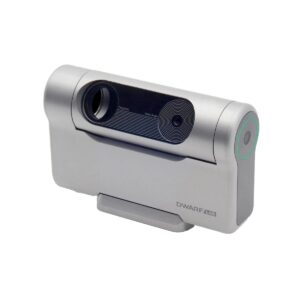
If you really want to take pictures without spending thousands of dollars, look at a smart scope. The Dwarf mini (or Dwarf II) is currently the most affordable option. These little powerhouses do all the searching and stacking work for you via an app.
How to prevent my lenses from fogging up while watching
Moisture in the air settles on cold glass. A dew hood (an extension of the tube) helps tremendously. Once your lenses are fogged up, blow dry them gently on the lowest setting or go inside; don't rub with a cloth.
Why at high magnification do I only see a blurred spot
This is often due to “seeing” (turbulence in the atmosphere). If the sky is shaking, you cannot magnify indefinitely. In the Netherlands and Belgium, 200x is often the practical limit; above that, the image rarely becomes sharper.
Do I really have to adjust (collimate) my mirror telescope every time
Not every time, but regularly. Collimating is straightening the mirrors. With a laser collimator, this is a two-minute job. It is essential for a sharp image with a reflector.
What good is a Barlow lens in my suitcase
A Barlow lens doubles the magnification of your current eyepieces. A 2x Barlow effectively turns your 10 mm eyepiece into a 5 mm eyepiece. It is an inexpensive way to get more magnification options.
Why is the image in my telescope upside down
In space, there is no up or down. Telescopes simply mirror the image through the lenses or mirrors. For stargazing, this does not matter. If you want to use the telescope for birds during the day, you need a reversing prism.
Is an expensive telescope also easier to use
Not necessarily. A large, expensive telescope is often heavy and complex. For a beginner, a manual Dobson is often much easier to understand than a complicated computer-controlled mount that you must first align to the pole star.
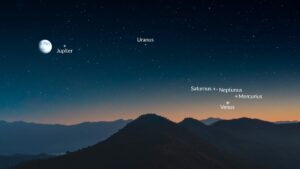
How do I find planets if I don't know where they are
Use an app such as Stellarium or SkySafari on your phone. These apps show you live where the planets are. Point your viewfinder at that point and you'll find them instantly.
Why is telescope aperture more important than magnification
The aperture determines how much light the telescope catches. The more light, the more detail you see and the sharper the image remains at higher magnification. A small telescope that magnifies 500x will only show a dark, fuzzy spot.
Do I really need expensive filters for the Moon and planets
A moon filter is nice because the full Moon can be blindingly bright through a telescope. Color filters for planets are nice for later, but not essential to begin with.
Can I do stargazing from the city with all the light pollution
Yes, planets and the Moon are not affected by city light. For faint nebulae and galaxies it does help to look for a dark place, but with a good aperture you can have a lot of fun even in the city.
What is the advantage of a lens telescope over a mirror telescope
A lens telescope (refractor) is virtually maintenance free and often gives a very high-contrast image. They are perfect for the Moon and planets, but get very expensive and heavy if you want a large aperture.
Why a tabletop Dobson is handy for vacationing
Models like the Sky-Watcher Heritage are compact and fit easily in the car. You put them on a sturdy table and you immediately have a full-sized telescope with a large aperture without lugging around heavy tripods.
How to safely store my telescope
Store it in a dry place at room temperature. After watching it overnight, leave the caps off for a while to allow any moisture to evaporate before storing it permanently.
Can I use a telescope to look directly at the sun
Never without a professional solar filter placed before the aperture of the telescope. Without a filter, you will immediately and permanently go blind and melt the interior of your telescope.
What exactly does a lunar diagonal or prism do
In a lens telescope, this little mirror allows you to comfortably look into the eyepiece from above, instead of having to be on your knees under the telescope.
Why people often recommend binoculars for beginners
Binoculars are easy to carry around and give a huge field of view. It is ideal for learning about the constellations and viewing large objects such as the Pleiades before going into the depths with a telescope.
How do I know if my telescope has cooled down
Glass expands and contracts with temperature changes. If you bring the telescope from a warm room to the outside, it often needs 30 to 60 minutes to “get used” to the outside air before the image becomes really sharp.
What is the difference between an Azimutal and an Equatorial mount
An Azimutal mount simply moves left/right and up/down (like a Dobson). An Equatorial mount follows the earth's rotation through one axis, which is useful for photography but more difficult to set up.
Are there telescopes that I can control with my voice
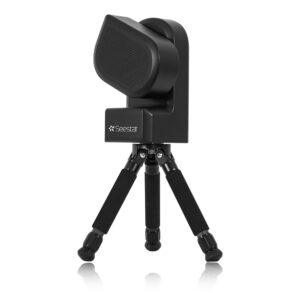
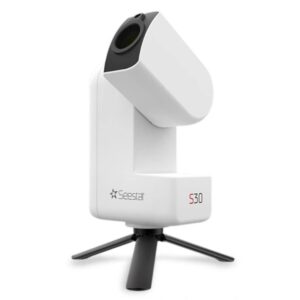
Not really by voice yet, but modern smart scopes you control entirely through an app on your tablet or phone. You tap an object and the telescope automatically turns toward it.
Where can I get the best honest advice for my first purchase
Avoid toy stores; there you will often find only “plastic junk” that frustrates. For real advice and good choice help, visit our Telescope Choice Guide. Have a specific question about a model? Then click on the WhatsApp icon at the bottom right of your screen to chat directly with an expert.
 Dutch
Dutch English