
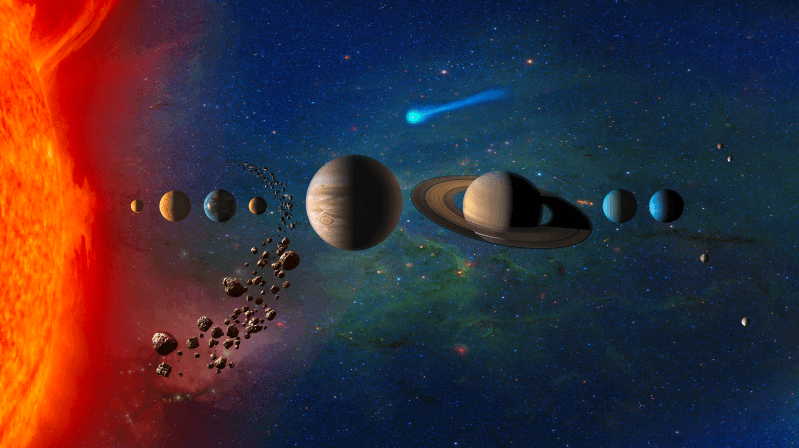
The night sky has fascinated us since the beginning of time. For centuries, what lies above has led to myths, scientific discoveries and missions into the unknown. But how well do we know our own solar system actually? From the red-hot surface of Venus to the icy edges of the Oort Cloud, this is the story of our place in the universe.
What is the solar system?
Our solar system is a complex and dynamic whole consisting of:
- The Sun, the center of our planetary system.
- Eight planets, from rocky worlds to colossal gas giants.
- Five officially recognized dwarf planets such as Pluto and Eris.
- Hundreds of moons circling planets and even asteroids.
- Tens of thousands of asteroids and comets in the Kuiper belt and Oort cloud.
The solar system is in a side arm of the Milky Way, known as the Orion Arm, and moves through the galaxy at a dizzying speed.
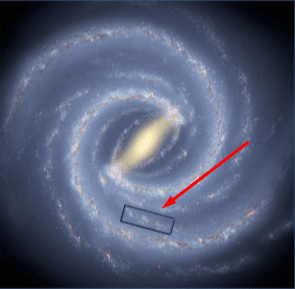
A solar system in motion
Although everything in our solar system revolves around the sun, our entire planetary system moves at a speed of 829,000 mph around the center of the Milky Way. One full orbit takes about 230 million years. The last time our solar system completed this journey, dinosaurs were still roaming the Earth.
But how far does our solar system extend? The planets are just the beginning. Far beyond the orbit of Neptune lies the Kuiper belt, a ring of icy objects. Even further is located the Ear Cloud, a giant spherical collection of frozen debris. The Oort cloud marks the limit of the sun's influence and possibly reaches up to 1.6 light years away.
The planets: from fiery infernos to frozen giants
Each planet in our solar system has its own unique character.
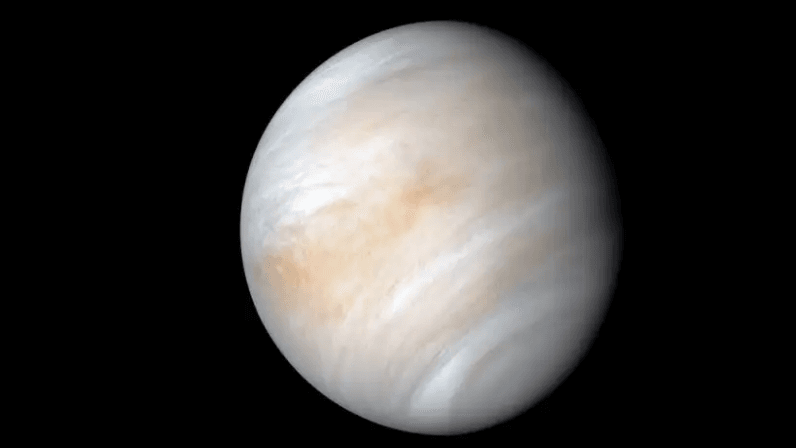
Venus: Hotter than Mercury?
NASA/JPL-Caltech
You would think that Mercury, the planet closest to the sun, would be the hottest. But it doesn't. That title goes to Venus, where temperatures reach 475°C. How can that be?
Venus has a thick atmosphere full of carbon dioxide and sulfuric acid clouds. This creates an extreme greenhouse effect where heat is trapped. This makes Venus hotter than Mercury, despite Mercury being much closer to the sun.
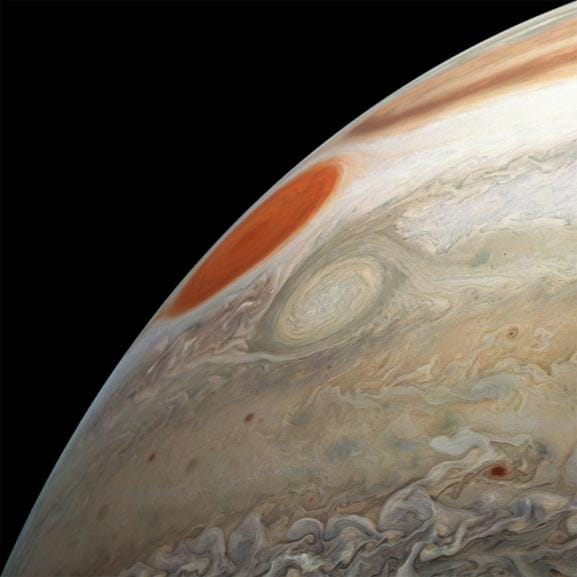
Jupiter: The giant of our solar system
Credit: Processed image by Sean Doran (CC BY-NC-SA), based on images from NASA/JPL-Caltech/SwRI/MSSS.
The largest planet in our solar system is Jupiter. Imagine that you 1,000 earths could compress - you still wouldn't reach the full size of Jupiter. This gas giant has the strongest magnetosphere and the most intense storms, including the famous Big Red Spot, a storm that has raged for centuries.
Rings and moons: The beauty of Saturn
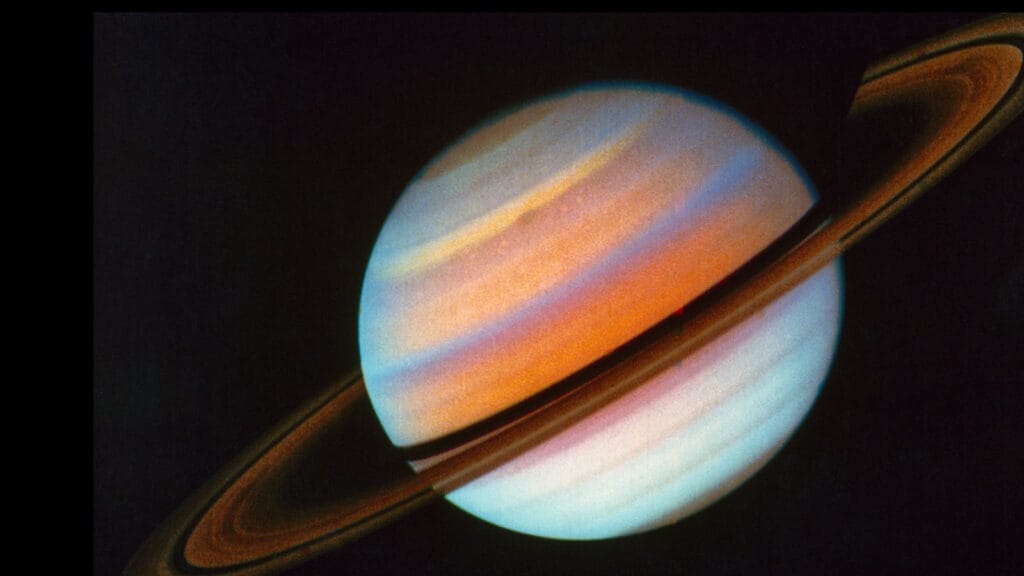
Credits: NASA/JPL-Caltech
Saturn is perhaps the most iconic planet in our solar system, and that is due to its spectacular rings. But did you know that all gas giants have rings? The rings of Uranus and Neptune are much more subtle and less visible, but they are there.
In addition to rings, our solar system counts hundreds of moons. Jupiter and Saturn each have dozens of moons, and even asteroids sometimes have small moons in their orbits.
Space exploration: Our journey beyond the planets
Since the 1970s, we have not only studied but actively explored the solar system. More than 300 robotic missions have been launched to investigate planets, comets and even interstellar space.
Two of the most legendary missions are Voyager 1 and 2. These space probes, launched in 1977, are the first human objects to leave our solar system. They are still sending back data and won't return until about thousands of years leaving the Oort cloud.
Other missions such as Pioneer 10, Pioneer 11 and New Horizons will eventually reach interstellar space as well.
Life in our solar system?
As far as we know, is the earth the only place where life occurs. But NASA and other space agencies are actively looking for signs of life elsewhere. Mars, with its dry riverbeds, and the icy oceans beneath the surface of Europa (moon of Jupiter) and Enceladus (moon of Saturn), are promising candidates.
The question remains: Are we alone? Although we do not yet have a definitive answer, we are at a time when we may finally be able to answer this age-old question. Want to read more about so-called ‘exoplanets’? Click here!
A solar system full of wonders
From the boiling heat of Venus to the icy edges of the Oort Cloud, our solar system is a place of extremes and mysteries. We have already learned an incredible amount, but there is still much to discover. As humanity looks further than ever before, it is only a matter of time before we uncover even more secrets of our solar system.




 Dutch
Dutch English