
Optical Accessories
Showing 1–12 of 86 resultsSorted by popularity
Showing 1–12 of 86 resultsSorted by popularity
Optics and imaging: get the most out of your telescope
The telescope tube is the engine of your hobby, but the optics and the image determine the final experience. In astronomy, your telescope is only as strong as the weakest link in the optical chain. Whether you're looking through an eyepiece with your own eyes or capturing the most distant galaxies with a camera, it's all about managing light.
Under the category optics and image fall all components that process, correct and perfect the incoming light. From eyepieces that determine magnification to filters that counteract light pollution, and from barlow lenses that double the focal length to zenith prisms that provide comfortable viewing. In this guide, we explain how to combine these different elements for a crystal clear image.
The anatomy of a perfect image
When we talk about optics and image, we look at the full path a photon takes from the moment it enters the telescope until it hits your retina or camera sensor. This path consists of three main stages:
Light collection: This happens through your telescope's main mirror or objective lens.
Light correction: Here we use accessories such as coma correctors, field flatteners or filters to eliminate optical errors and environmental factors.
Imaging: The moment when light is converted into a perceivable image via a eyepiece or a camera.
The main components within optics and imaging
To improve your image quality, you need to know which knobs to turn. The category optics and image is divided into several crucial product groups.
1. Eyepieces: the engine of your magnification
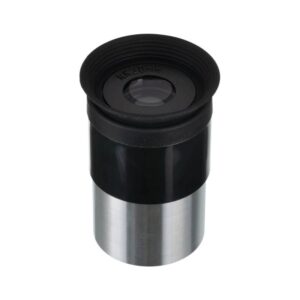
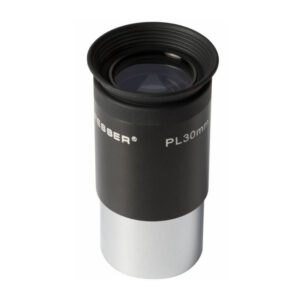
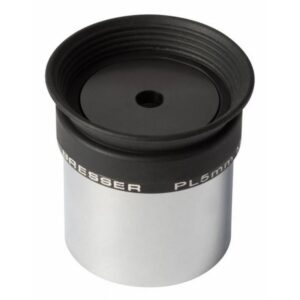
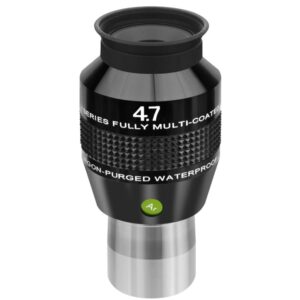
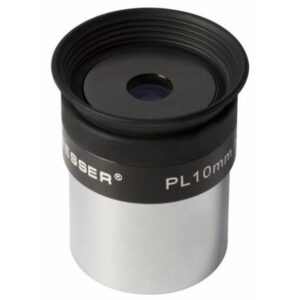
Without a good eyepiece, your telescope is unusable. The eyepiece determines how large you see the object, but also how wide your field of view is. Many beginners make the mistake of focusing only on the highest possible magnification. However, the true expert knows that a calm, high-contrast image at medium magnification often reveals much more detail than a bloated, blurry image at too high magnification.
2. Barlow lenses and focal extenders
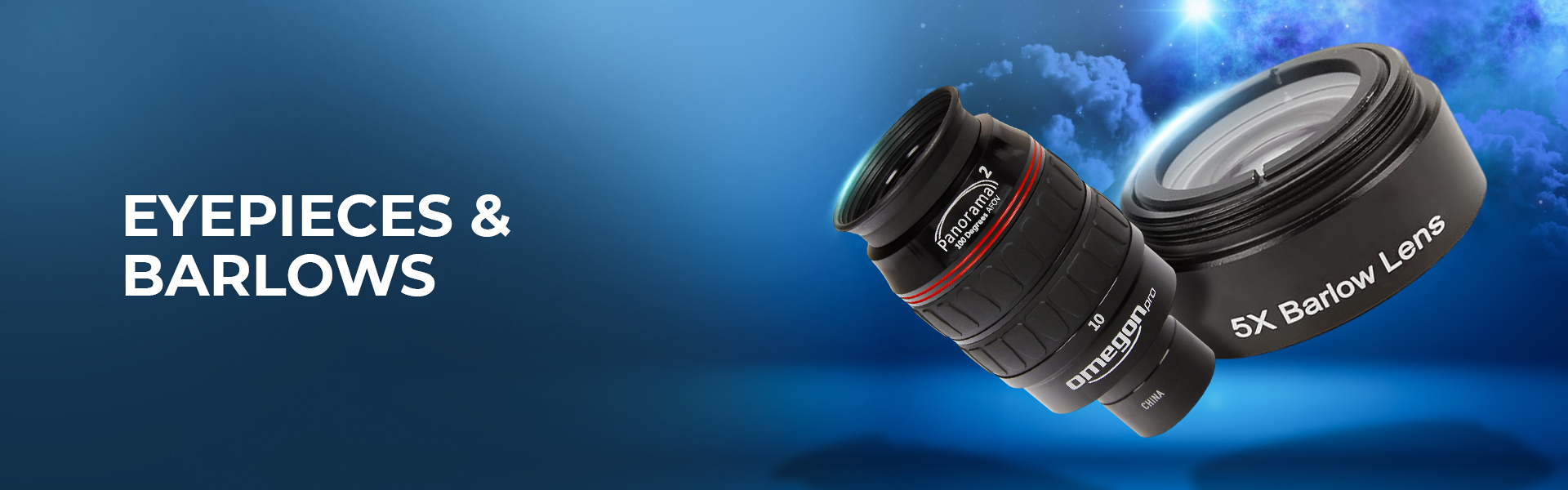
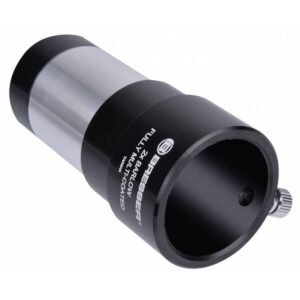
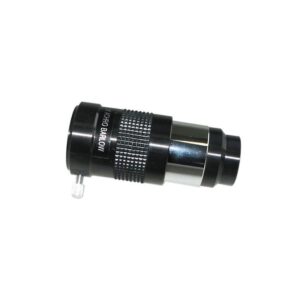
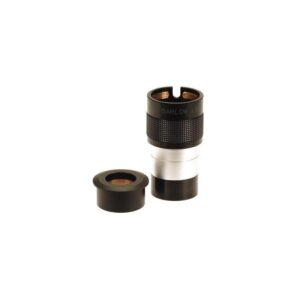
Want to double or even triple the magnification of your current eyepieces? Then a barlow lens is an indispensable addition to your optics and image collection. A barlow lens is placed between the telescope and eyepiece and increases the effective focal length of your system. This is a cost-effective way to increase your range without having to immediately buy a series of new eyepieces.
3. Filters: contrast in a world of light pollution
In a country like the Netherlands, we suffer from artificial light almost everywhere. Telescope filters are the solution to block this unwanted light. Within the category optics and image we distinguish between:
Moon filters: To dampen the bright glare of the moon.
UHC filters: For increasing contrast in nebulae by filtering out city light.
Planetary filters: Specific colors that bring out details such as the red spot on jupiter.
Comfort and ergonomics: zenith prisms and diagonal mirrors
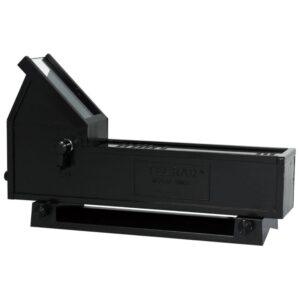
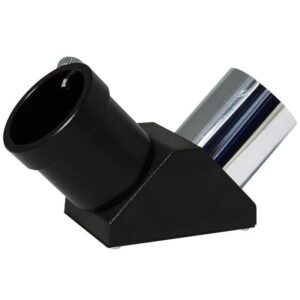
Nothing ruins a night of stargazing faster than a stiff neck. Because telescopes are often pointed upward, you would have to wriggle into impossible turns to look through the eyepiece without additional aids. A zenith prism or diagonal mirror deflects light by 90 degrees so you can comfortably look from above or to the side.
Within the world of the optics and the image there are two grades of quality in prisms:
Standard prisms: Functional and affordable.
Dielectric mirrors: These have a reflectivity of 99%, so virtually no light is lost. For the serious deep-sky observer, this is a crucial upgrade.
Image correction for astrophotography
If you are going to take pictures, your camera has much higher demands on optics and image than your own eye. In fact, cameras also flawlessly capture errors at the edges of the visual field.
Coma correctors for newtons
Newton telescopes naturally suffer from coma: stars at the edge of the image look like tiny comets. A coma corrector fixes this, giving you point-shaped stars all over the plane of your sensor.
Field flatteners for refractors
Lens telescopes often have a slightly curved field of view. For visual use you don't notice this, but on a flat camera sensor the corners are then blurred. A field flattener corrects this curvature and is an essential part of the optics and image setup of every astrophotographer.
The influence of coatings on image quality
When you browse through our range of optics and image browsing, you'll see terms like ‘multi-coated’ or ‘fully multi-coated. This refers to the chemical layers applied to the lenses. Each time light passes through a glass surface, a small amount reflects back. Coatings allow more light by the glass goes and reflects less. This results in:
A brighter image (more light reaches your eye).
Higher contrast (less stray light in the tube).
Less “ghosting” on bright objects such as the moon and planets.
Frequently asked questions about optics and imaging
Can I combine eyepieces and filters from different brands? Yes, fortunately the world of optics and image largely standardized. Eyepieces and filters almost all use the 1.25 inch or 2 inch standard. So you can easily use an omegon eyepiece in a sky-watcher telescope.
Why is my image not sharp despite my expensive optics? This can have several causes. The most common reasons are atmospheric turbulence (seeing), a telescope that has not yet cooled to the outside temperature, or a mount that is vibrating. Always make sure you optics and image setup is stable and given time to acclimate.
How do I clean my lenses and mirrors? Our golden rule: as little as possible. A little dust doesn't affect the image. Do you have to clean anyway? Then use only special tools from the optics and image category, such as a blower or optical cleaning fluid, to avoid scratching the coatings.
Why buy your optics from telescoop.nl?
We understand that the plethora of choices in optics and image can be overwhelming. Do you need a barlow or just another eyepiece? Which filter works best in your garden? We are here for you with honest and specialist advice.
At telescoop.nl you benefit from:
Specialist knowledge: We test the products ourselves under the stars.
Ample stock: From basic accessories to high-end correctors.
Prompt delivery: Ordered before 11:59 p.m., in most cases within 48 hours.
Quality assurance: Only products that meet our optical standards make it to the web shop.
Invest in the right optics and the image and discover details in the universe you never thought possible before. Your telescope deserves the best, and so do you.
 Dutch
Dutch English