
Coma Correctors
Showing all 4 resultsSorted by popularity
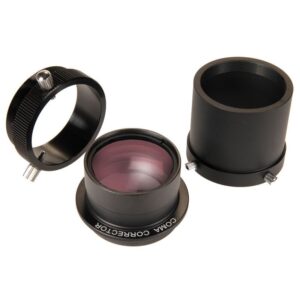
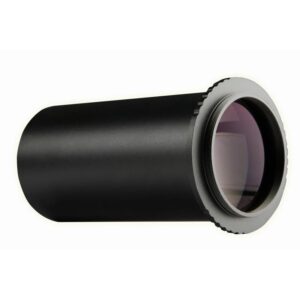
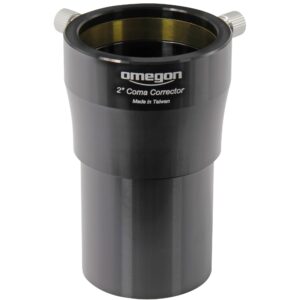
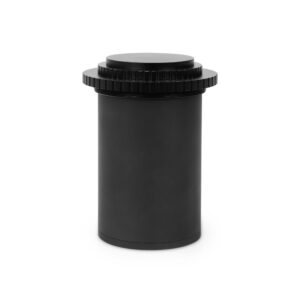
Showing all 4 resultsSorted by popularity
The function of a coma corrector
A comacorrect is an optical instrument specifically designed for use with Newtonian telescopes. In this type of telescope, particularly with ‘fast’ systems with a low f-ratio (such as f/4 or f/5), an optical aberration called coma occurs at the edges of the field of view. A comacorrect This corrects the light path, so that stars no longer distort into comet-like shapes, but remain point-shaped across the entire sensor.
What is a coma?
Coma occurs because light rays hitting the primary mirror at an angle do not converge at exactly the same point in the focal plane as rays entering parallel to the optical axis. This results in stars becoming increasingly elongated towards the edge of the image, with a characteristic ‘tail’ pointing away from the center. The larger the camera sensor (such as APS-C or full-frame), the more prominent this aberration is visible.
Maintain focal length
Most coma correctors are designed to keep the focal length of the telescope virtually unchanged (1.0x factor). This keeps the system's aperture ratio the same. However, there are also variants that also function as reducers, which increases the field of view and decreases exposure time. The choice of a specific corrector depends on the mechanical connection of the focuser and the desired image scale.
Installation and back focus
As with other optical correctors, the distance between the corrector and the sensor (back focus) determines the result. For most common models, this is 55 mm. If this distance is not precisely maintained, residual coma will remain visible or overcorrection will occur. Therefore, using the correct adapters and extension rings is essential to position the optical elements correctly in the light path.
 Dutch
Dutch English