
Laser Collimators
Showing all 8 resultsSorted by popularity
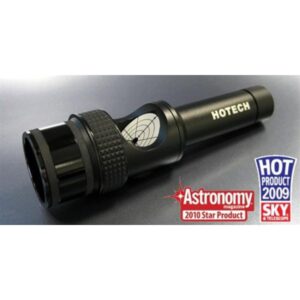
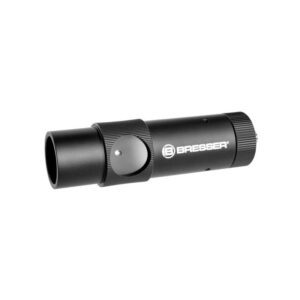
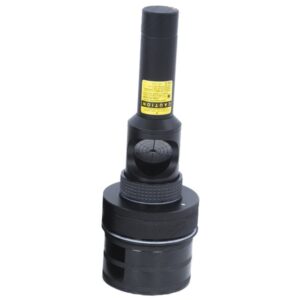
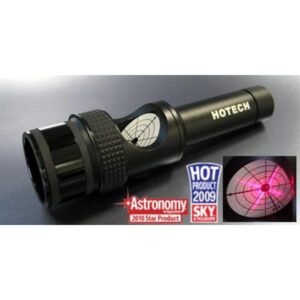
Showing all 8 resultsSorted by popularity
Laser collimators: The basis for a razor-sharp image
A Newton telescope is an optical masterpiece, but only if the mirrors are exactly aligned. We call this process collimation. Without a proper laser collimator this is often a frustrating chore in the dark. A high-quality laser unit transforms this task into a thirty-second operation.
At Telescoop.nl, we know that a fraction of a millimeter makes the difference between a fuzzy spot and the razor-sharp details of the Cassini separation in Saturn's rings. This is why we only select collimators with a stable housing and a flawless laser tip.
Why a laser collimator indispensable
Anyone with a transportable telescope, such as a Dobson, knows that vibrations during transport can interfere with alignment. A laser collimator offers the solution here:
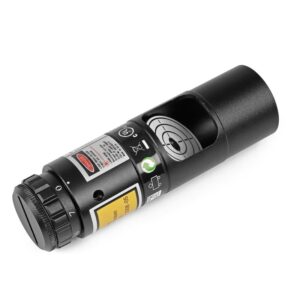
Speed and convenience: You can immediately see where the light beam hits the catch mirror and the main mirror. No more guessing through a hole in a cap, but visual confirmation on the disc of the collimator.
Collimating in the dark: Because the laser itself emits light, you don't need a flashlight to inspect your mirrors. This is crucial during an observing session in the field.
Repeatable precision: Because of the clear projection of the red dot on the ’target’ of the collimator, you can be sure that your optical axis is exactly centered every time.
Technical structure for the serious astronomer
You can find these tools under the specific category telescope accessories/laser collimators/.
This direct classification within our telescope accessories is a deliberate choice. At Telescoop.nl, we don't believe in tucking away essential maintenance tools in a general folder. A laser collimator is a technical tool that deserves its own place. This deep structure ensures that both discerning users and search engines understand that we are the specialists in perfecting the optical train. We provide the hardware that lets your telescope perform as the manufacturer intended.
What should you look for in a laser collimator?
Not every laser that fits in a focuser is a precision instrument. Consider the following quality characteristics when purchasing:
Own alignment of the laser: The laser unit itself must also be collimated. Our models have adjustment screws (often hidden under caps) so that the laser beam itself remains exactly centered in the housing even after years of use.
The fit (1.25″ vs. 2″): Make sure the collimator is free of play in your focuser. A collimator that ‘tilts’ in the mount will give a false reading. Use a quality adapter if necessary.
Adjustable brightness: An overly bright laser beam can ‘bleed’ onto a mirror, making the dot inaccurate. Our premium models have adjustable modes for maximum precision.
Getting maximum sharpness from your mirrors
Do you have a fast Newton (f/4 or f/5)? Then the tolerance for errors is extremely small. A laser collimator is then not a luxury, but a necessity. In doubt between a classic Cheshire or a modern laser unit for your particular scope? Get in touch. We have aligned hundreds of telescopes and know exactly which tool provides the highest accuracy for your setup.
 Dutch
Dutch English