
Eyepieces and Barlows
Showing 133–144 of 179 resultsSorted by popularity

- Price range: 229,00 through 269,00 Select options This product has multiple variants. The options may be chosen on the product page
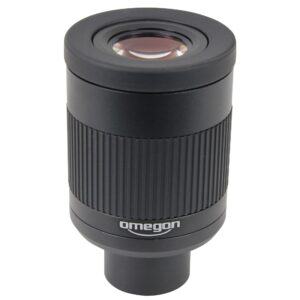
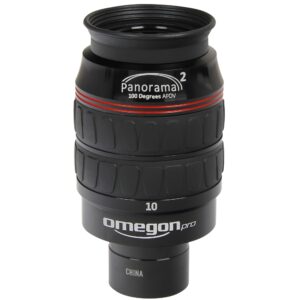
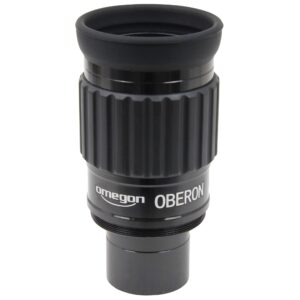
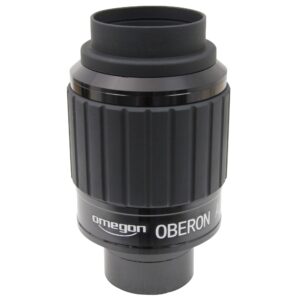
Showing 133–144 of 179 resultsSorted by popularity
Buying telescope eyepieces: how to really get more out of your telescope
Those who are serious about stargazing soon discover that buy telescope eyepieces is at least as important as the purchase of the telescope itself. The eyepiece is half of the optical system; for it determines not only the magnification, but also how sharp the image is, how much sky you can see at a glance, and how comfortable you can observe. You can have completely different experiences with the same instrument, purely because of a different eyepiece to use.
Many telescopes come standard with one or two simple eyepieces. While fine to begin with, these included accessories rarely exploit the full potential of the optic. By investing in quality eyepieces you see more detail on planets, experience more overview on vast deep-sky objects, and view more calmly, without your eyes getting tired quickly.
What exactly does an eyepiece do?
A telescope acts as a light collector, gathering light from distant stars into a focal point. The eyepiece then acts as a powerful magnifying glass that enlarges this focal point, allowing you to observe the image with your own eye. The most important characteristic of an eyepiece is its focal length, which is always expressed in millimeters (mm).
The formula for augmentation is simple and essential for anyone who is telescope eyepieces wants to buy:
Calculation examples for practice
Suppose you have a popular Newton telescope with a focal length of 1200 mm. If you use a 10 mm eyepiece, you get:
1200 / 10 = 120x magnification.
If you use a 25 mm eyepiece on that same telescope, the math looks like this:
1200 / 25 = 48x magnification.
This means that with only one telescope, but several eyepieces, can switch effortlessly between a wide view of the Milky Way and the smallest details in a lunar crater.
What magnification are you using for what?
At buy telescope eyepieces it is important to have realistic expectations. In astronomy, more magnification is not automatically better. The stability of the atmosphere (seeing), the optical quality of your telescope and the strength of your mount determine the limit of what makes sense.
Broadly speaking, you can go by these categories:
High magnification (2 mm - 8 mm)
This range is specifically designed for planets and details on the moon. It reveals the rings of Saturn, the cloud bands on Jupiter and the finest ridges in lunar craters. This type eyepiece works best during nights with very stable skies and with a well-collimated telescope.
Average magnification (9 mm - 15 mm)
This is the most versatile category. These eyepieces are ideal for the moon and planets, as well as compact deep-sky objects such as globular clusters and planetary nebulae. For many observers, this is the most used range in their case.
Low magnification / wide image (15 mm - 30 mm and above)
Indispensable for looking up objects and for viewing vast deep-sky areas. You see more context, such as the full Orion Nebula or the Andromeda Nebula, and the image looks much quieter.
The importance of the apparent field of view
In addition to focal length, the Apparent Field of View (AFoV) plays a huge role in perception. This is expressed in degrees (°).
A eyepiece with a larger field of view simply shows more sky at the same time at the same magnification. This is not only more pleasing to the eye, but also practical. Telescopes without a tracking motor keep objects in focus longer.
50 degrees (Plössl): The classic design. The image is sharp, but feels a bit like looking “through a tunnel.”.
68 to 82 degrees (Wide Angle): These eyepieces give a spatial effect. It feels like floating in front of a large spaceship window; you really have to move your eye to see the edges of the image.
100 degrees and above: The ultimate experience for the advanced observer, where the edge of the eyepiece seems to disappear completely.
Comfort: eye relief and viewing comfort
An often underestimated aspect in the buying telescope eyepieces is eye relief, also known as eye relief. This determines how far your eye must be from the lens to survey the full field of view.
With short eye relief, you have to press your eye almost against the lens. This is not only tiring, but also causes lenses to fog up faster due to the heat from your face. For spectacle wearers, an eye relief of at least 17 mm to 20 mm is crucial to be able to see the field of view without having to take off the glasses. Modern eyepieces are often designed to provide comfortable eye relief despite a short focal length.
Coatings and accessories: the details that count
Virtually all qualitative telescope eyepieces in our range feature multiple broadband coatings (Fully Multi-Coated). These thin layers on the glass reduce light loss and internal reflections. The result? More contrast and a brighter image, which can make the difference between seeing or not seeing an object, especially in extremely faint nebulae.
In addition, almost all eyepieces have a standardized filter thread at the bottom. This allows you to easily attach accessories such as moon filters, UHC filters or planetary color filters to your eyepiece screws. That way you don't have to buy a separate filter for each instrument.
How many eyepieces do you really need?
As specialists, we advise beginners to start with a small, thoughtful set rather than a case full of budget copies that overlap. A practical basic set consists of three steps:
An overview eyepiece (e.g., 25 mm - 32 mm): To find objects and view large nebulae.
A yard horse (e.g., 12 mm - 15 mm): For general use on the moon and deep-sky.
A detail eyepiece (e.g., 5 mm - 7 mm): Specifically for more serious work on planets and binary stars.
From this base, you can further expand the set based on your specific interests. Someone who only observes planets is more likely to invest in eyepieces with extremely high contrast, while a deep-sky hunter is more likely to opt for the largest fields of view.
Will every eyepiece fit every telescope?
Before you going to buy telescope eyepieces, you need to check the size of your focuser. There are two standard sizes:
1.25 inches (31.7 mm): The most common size for virtually all telescopes.
2 inches (50.8 mm): Mainly found on larger telescopes for extremely low magnifications and very wide fields of view.
Remember that each telescope has a practical maximum magnification. As a rule of thumb, we use twice the aperture of the telescope in millimeters. So a telescope with an aperture of 100 mm can magnify up to about 200x. Above that, the image becomes larger, but no longer sharper; you then only increase the blur.
Why investing in quality pays off
The buying telescope eyepieces is not a race to the highest magnification, but an investment in more fun under the stars. Good optics last a lifetime. Even if you decide to buy another telescope ten years from now, your quality eyepieces will remain usable.
At telescoop.nl, we select our eyepieces based on mechanical build quality and optical performance. Whether you are looking for an affordable Plössl to start your set with or a high-end wide-angle eyepiece for the ultimate space experience, we have it.
If you order before 11:59 p.m., we'll make sure you get your new eyepieces within 48 hours in most cases. So you'll be ready for the next clear night.
 Dutch
Dutch English