
Standard field of view eyepieces
Showing 25–36 of 70 resultsSorted by popularity
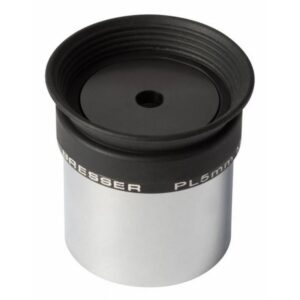
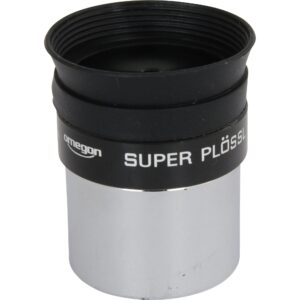
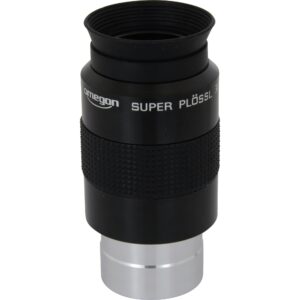
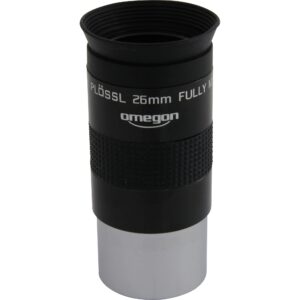
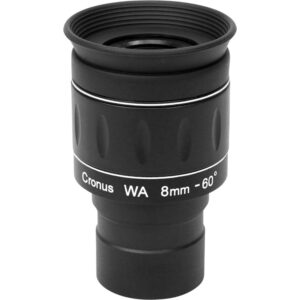
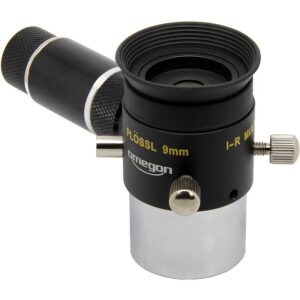
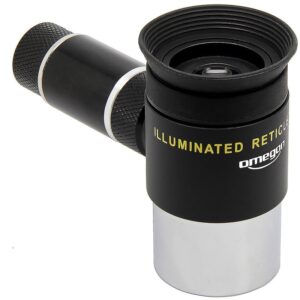
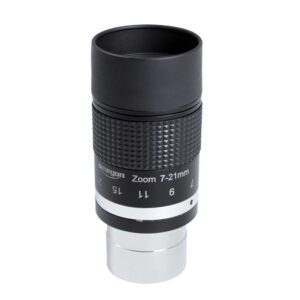
Showing 25–36 of 70 resultsSorted by popularity
Eyepieces with standard field of view: The core of optical purity
In a market dominated by wide-angle marketing, the standard eyepiece remains the undisputed king of contrast and sharpness. A standard field of view - usually around the 50° to 52° - is the gold standard for astronomers who prioritize what happens on the axis of the image. Whether you are studying the subtle cloud bands of Jupiter or want to separate the gossamer details of a binary star, a well-constructed standard eyepiece often delivers a purer image than a complex wide-field design.
At Telescoop.nl, we select these eyepieces based on glass purity and coatings, not trends. For the purist, this is the shortest route to a perfect image.
Why professionals choose a standard field of view
It is an optical law: the fewer lens elements light has to pass through, the less chance of scattering and light loss. Standard eyepieces, such as the legendary Plössl design, offer specific advantages:
Superior Contrast: The simple but effective design makes the sky background blacker, allowing faint details in nebulae and planets to stand out better.
Transmission: Fewer glass surfaces mean higher light transmission. Every photon your telescope captures actually reaches your eye.
Geometric Correction: Whereas cheap wide-field eyepieces often distort at the edges, a quality standard eyepiece remains sharp and undistorted across the entire field.
Specialist navigation for the connoisseur
Our expertise translates directly into how we offer our hardware. This category is not just a collection of lenses; it is a specific segment within our eyepieces and barlows section.
Through this targeted subdivision among telescope accessories we ensure that you, the observer, have immediate access to the right optics for your specific purpose. It's this deep, technical structure that sets Telescoop.nl apart from general box-shoppers: we understand the hierarchy of your optical train.
What do you look for when purchasing?
To get the most out of your telescope, the eyepiece must fit your instrument and your observing purpose:
The Focal Length: A 25mm to 32mm eyepiece is ideal for locating objects and extended star clusters. For high magnifications in lunar and planetary observations, choose 6mm to 12mm.
Coatings: We carry only eyepieces with Multi-Coating (MC) or Fully Multi-Coating (FMC). This is essential to eliminate internal reflections and maximize brightness.
Build quality: Pay attention to things like blackened lens edges and a solid housing. This prevents stray light and guarantees that your eyepiece will last a lifetime.
Need help with your choice?
The performance of an eyepiece is closely related to the aperture ratio of your telescope. An f/5 scope makes different demands on a Plössl than an f/10 refractor. Do you have doubts about the ideal magnification or want to know which brand offers the best value for money? Ask us. We are here to make sure you see the sky as it was meant to be seen: razor sharp.
 Dutch
Dutch English