
Focus Masks
Showing all 5 resultsSorted by popularity
Showing all 5 resultsSorted by popularity
The operation of focus masks
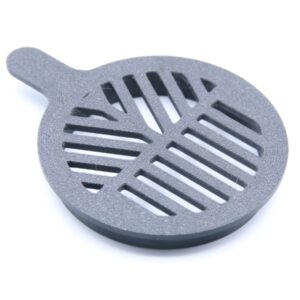
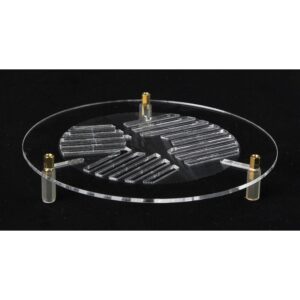
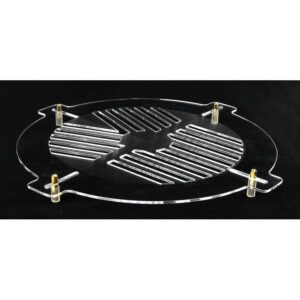
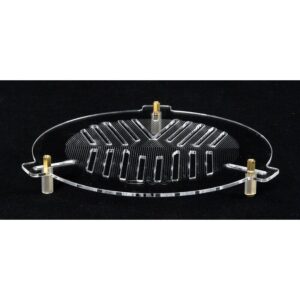
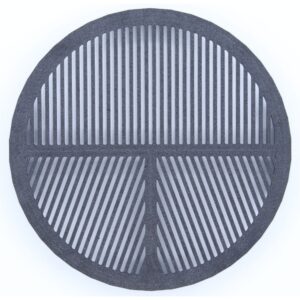
A focus mask is an optical aid placed in front of the telescope's opening to visually check the focusing of stars. The most commonly used type is the Bahtinov mask. This mask uses diffraction to create a specific star pattern, making the smallest deviations in focus instantly visible on the camera screen.
Diffraction patterns and precision
When a Bahtinov mask is placed over the lens or mirror, it refracts incoming starlight into three distinct lines (spikes). With an out-of-focus image, the center line is offset from the other two lines. As soon as the center line passes exactly through the intersection point of the outer two lines, focus is achieved. This system operates independently of atmospheric conditions (seeing), making it more reliable than focusing by eye.
Materials and fasteners
Focus masks are usually made of lightweight plastic or thin metal so as not to disturb the balance of the telescope. They feature adjustable legs or clamps, allowing one mask to fit telescopes of different diameters within a given range. It is essential that the mask hangs flat and centered in front of the optics to generate a clean diffraction pattern.
Application at different focal lengths
Although electronic focus motors are becoming increasingly common, a manual focus mask remains an indispensable tool for quick checks at the beginning of a session. They are effective for both the short focal lengths of camera lenses and the long focal lengths of Schmidt-Cassegrains or refractors. After focusing, the mask is removed to begin actual captures.
 Dutch
Dutch English