
Monochrome
Showing 1–12 of 25 resultsSorted by popularity
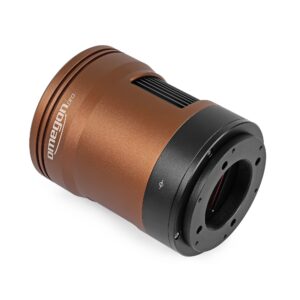
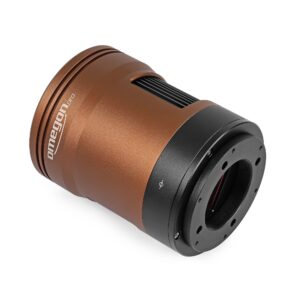
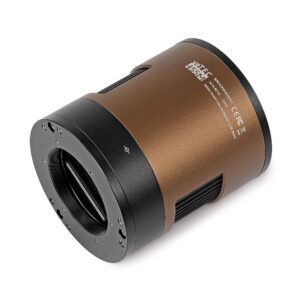
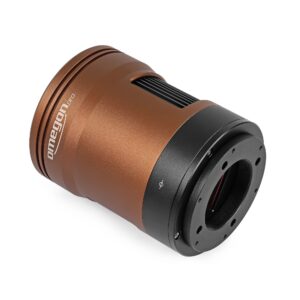
Showing 1–12 of 25 resultsSorted by popularity
Why choose a monochrome astro camera?
When capturing deep-sky objects such as nebulae and galaxies, the choice is between a color (OSC) and a monochrome camera crucial. A monochrome sensor has no Bayer filter (color matrix). This means that each pixel captures 100% of the incoming light, regardless of wavelength. The result is higher quantum efficiency and a sharper image with less noise compared to color cameras of similar size.
Maximum resolution and sensitivity
Because monochrome cameras do not require interpolation to calculate colors, you retain the full resolution of the sensor. This is especially noticeable when photographing fine structures in gas clouds or the cores of distant galaxies. For astronomers striving for the highest achievable signal-to-noise ratio (SNR), a monochrome setup is the standard.
Narrowband photography (Narrowband)
One of the greatest advantages of monochrome astro cameras is their effectiveness in narrowband photography. By using filters such as H-alpha, OIII and SII, you can isolate specific emission lines. This allows you to take high-contrast shots even from areas of high light pollution. Because with a monochrome sensor all pixels allow light from the filter to pass through, the data yield per exposure is considerably higher than with a color camera, where only a fraction of the pixels (for example, only the red ones in H-alpha) are utilized.
The workflow with filters
Working with a monochrome camera requires a filter wheel and a set LRGB-filters to create a color composition. Although this process requires more time in both acquisition and post-processing, it offers unprecedented control over the final data. You can adjust the exposure time for each channel based on the transparency of the sky or the specific characteristics of the object you are capturing.
Advice for your setup
When selecting a monochrome camera, consider the pixel size in relation to the focal length of your telescope (image scaling). A good match prevents ‘undersampling’ or ‘oversampling,’ which directly affects the details in your shots.
Do you have questions about which sensor best suits your optical system or which filters are necessary for your specific goals? Our specialists will gladly support you in putting together a balanced configuration for high-quality astrophotography.
 Dutch
Dutch English