
Guide Cameras
Showing all 6 resultsSorted by popularity
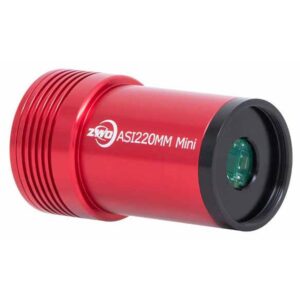
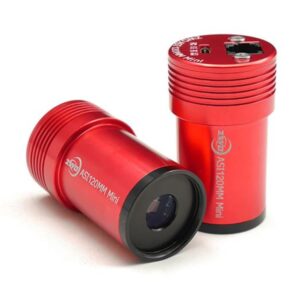
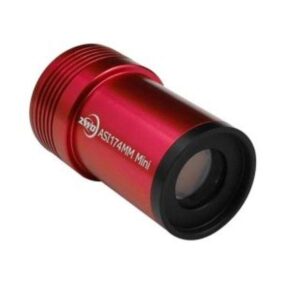
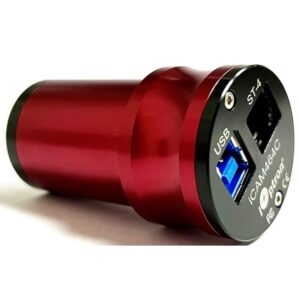
Showing all 6 resultsSorted by popularity
Why a Specific Guide Camera Is Essential
Autoguiding is the technique where a secondary camera corrects small tracking errors of the mount during astrophotography. Even the most accurate mounts suffer from periodic errors or minute misalignments. A dedicated camera guide continu analyzes the position of a guide star and sends direct corrections to the mount, ensuring stars remain perfectly round during exposures of several minutes.
Sensitivity and Framerate
Unlike primary imaging cameras, a guide camera is all about high quantum efficiency and fast readout. Since guide stars are sometimes faint, the sensor must be able to capture enough signal with short exposure times (often between 1 and 3 seconds). Modern monochrome sensors in compact housings are the standard here, as they offer more contrast on faint stars than color sensors.
Different methods of guiding
There are two main methods for implementing a guide camera in your setup:
Guidescope A small, side-by-side telescope that houses the guide camera. This is an accessible method that works excellently for short to medium focal lengths.
Off-Axis Guider (OAG): A small prism is placed in the light path of the main telescope to reflect a portion of the light to the guide camera. This prevents problems with differential flexure (bow between two telescopes) and is the recommended method for long focal length systems, such as Schmidt-Cassegrains.
Compact form factor and compatibility
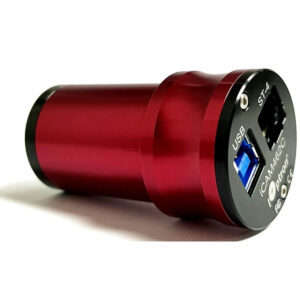
Most guide cameras use the 1.25-inch eyepiece form factor. This makes them universally compatible with virtually any guidescope or OAG. Additionally, these cameras often feature an ST4 port, although most modern setups.
Advice for your tracking system
The choice of a guide camera is closely related to the focal length of your main telescope. Too large a mismatch in pixel size can affect the accuracy of the corrections. Our specialists will gladly help you determine the right configuration so that your tracking system offers the stability needed for high-quality astrophotography.
 Dutch
Dutch English