
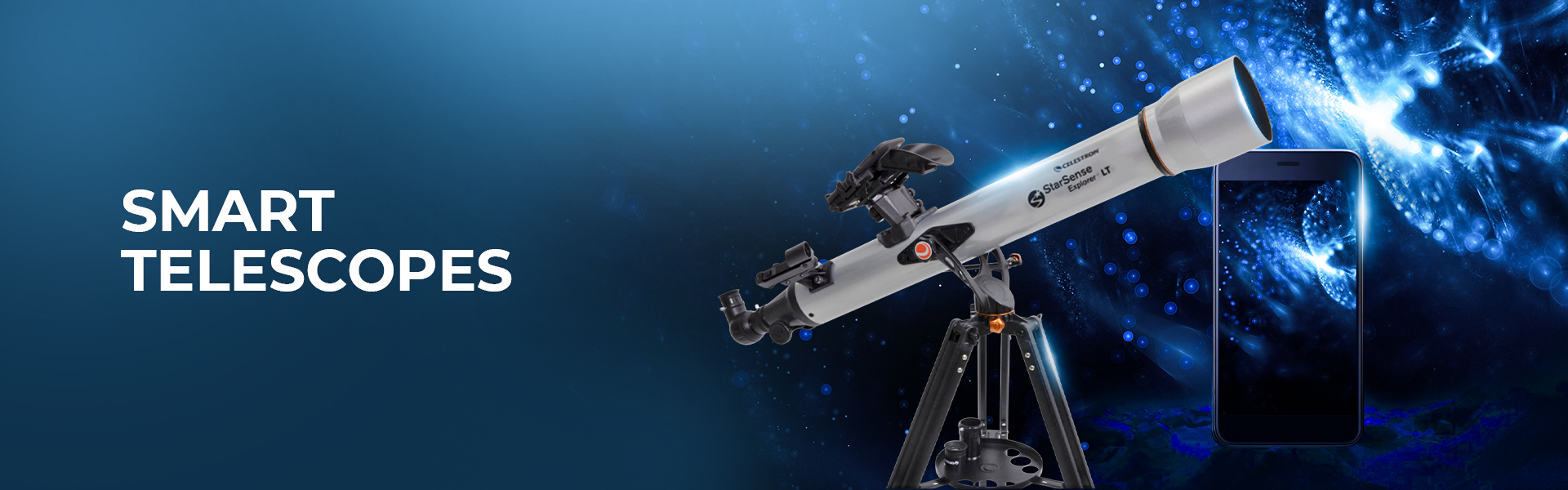
Smart telescopes
Showing 1–12 of 16 resultsSorted by popularity

- Price range: 199,00 through 299,00 Select options This product has multiple variants. The options may be chosen on the product page

 Price range: 1.590,00 through 2.790,00 Select options This product has multiple variants. The options may be chosen on the product page
- Price range: 4.499,00 through 4.699,00 Select options This product has multiple variants. The options may be chosen on the product page
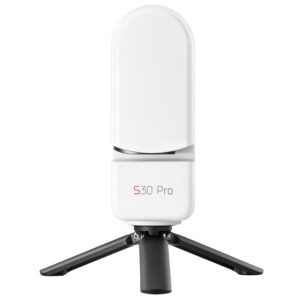
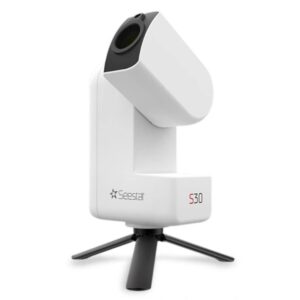
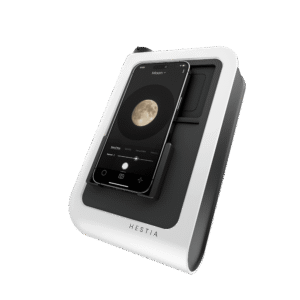
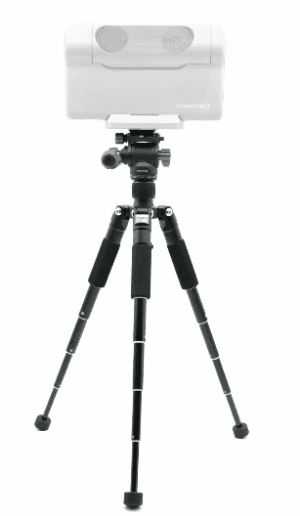
Showing 1–12 of 16 resultsSorted by popularity
Smart telescopes knowledge center: the revolution in stargazing
The world of astronomy has changed fundamentally in recent years with the advent of the smart telescope. Where you used to spend hours aligning mounts, connecting laptops and manually focusing cameras, you can now start a complete astrophotography session with one tap on your smartphone. Smart telescopes integrate optics, a sensor, a computer and a mount in one compact system.
Whether you live in a light-polluted city or want to take the telescope with you to a dark place on vacation, this makes astronomy more accessible, social and fun than ever before. In this knowledge center, we compare the top models of 2025 and explain the technology that makes this revolution possible.
The best smart telescopes of 2026: our shortlist
The market for smart telescopes is growing at lightning speed. To help you choose, we have divided the current generation of devices into categories based on their strongest features.
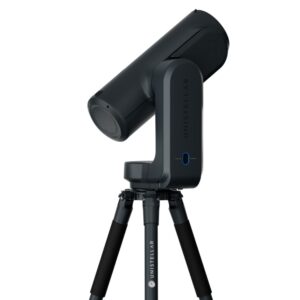
1. The ultimate all-rounder: Celestron Origin Mark II
The Celestron Origin is more than a smart scope; it is a full-fledged home observatory. Using the legendary rasa-optics (f/2.2), this system gathers light at record speed. It is the choice for the discerning user who wants top-quality images without the complexity of a separate astrophotography setup.
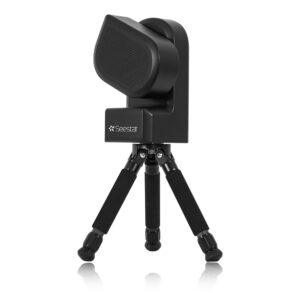
2. Best value for money: ZWO Seestar S50
The Seestar S50 has broken open the market. For a fraction of the price of high-end systems, ZWO offers an apochromatic refractor that delivers amazing results on the moon, the sun (with filter) and bright nebulae. It is the ideal entry-level system for any family.
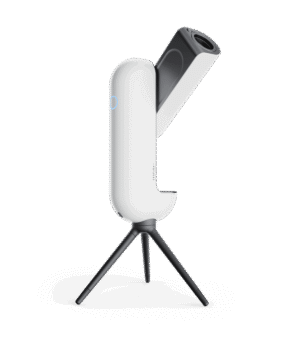
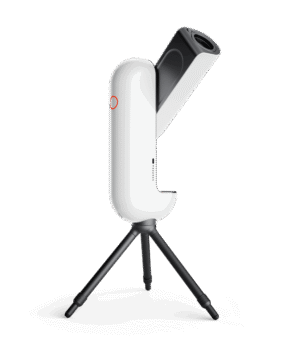
3. The resolution king: Vaonis Vespera Pro
For those who value details in deep-sky objects more than anything else, the Vespera Pro is the standard. With a high-quality quadruplet lens and innovative software features such as CovalENS (for panoramas) and PerseverENS (for shooting over several nights), this unit delivers images previously unattainable by compact systems.
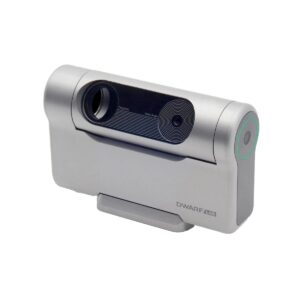
4. Maximum versatility: DwarfLab DWARF 3
The DWARF 3 is unique because it doesn't just look at the stars. Thanks to its dual camera setup, it is also excellent for daytime wildlife photography and landscapes. It is the ultimate “travel telescope” that weighs barely a kilo.
How does a smart telescope actually work?
The heart of a smart telescope is the on-board computer. As soon as you turn on the telescope, it creates its own Wi-Fi network. Through the accompanying app on your smartphone or tablet, you command it to search for an object.
The telescope then uses plate solving: it takes a picture of the night sky, compares it with an internal database and thus knows to the second of arc what it is looking at. From then on, the ‘live stacking’ starts. The camera takes dozens of short shots that are superimposed by the software. This makes the noise disappear and you see the colors of nebulae and galaxies appear live on your screen.
Software: the brain behind the experience
The hardware is important, but the software determines the ease of use. The three major players each have their own philosophies:
ZWO Seestar app: Known for its simplicity. The “Tonight's Best” feature instantly tells you what is currently visible, ideal for a quick session.
Vaonis Singularity: A highly aesthetic app that emphasizes the artistic quality of photos and sharing the experience with others.
Unistellar app: Focuses strongly on citizen science. Your observations can contribute directly to scientific research on asteroids or exoplanets in cooperation with SETI and NASA.
Frequently asked questions about smart telescopes
Do I need internet in the field? No. The telescope generates its own Wi-Fi signal. So you can connect to your smartphone even in the middle of the mountains or on a remote campsite.
Can I look at the sun? Yes, but only with a certified solar filter designed specifically for your model. Without a filter, the sensor will be damaged beyond repair. Many models, such as the Seestar S50, come standard with a solar filter.
Is a smart telescope suitable for cities with a lot of light pollution? Absolutely. Thanks to digital image processing and the ability to use narrowband filters (internally or via an adapter), performance smart telescopes surprisingly well in urban environments. The software can “calculate away” light pollution from the image, so to speak.
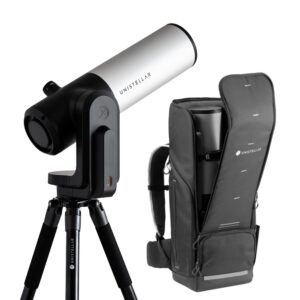
Can I use eyepieces? Most smart telescopes do not have an eyepiece holder; you look through a screen. Exceptions such as the Unistellar eVscope or Odyssey Pro have an electronic eyepiece (EVF) for those who still want to keep that traditional “look and feel.”.
Your start at Telescoop.nl
At Telescoop.nl, we follow the developments of smart telescopes closely. We test each model for speed, app stability and, of course, final image quality.
Whether you're looking for a compact system for travel or a powerful platform for semi-professional astrophotography, we have the knowledge to guide you to the right model. If you order before 23:59, you'll have your smart telescope in most cases within 48 hours. Explore the universe with today's convenience.
Glossary of terms in brief
Alt-Az mount: A mount that moves up/down and left/right. Very easy to set up.
Live Stacking: The technique of digitally merging multiple short exposures for a sharp, noise-free image.
Plate Solving: Automatic recognition of the star field by the telescope's computer.
Duo-band filter: A filter that passes specific light from nebulae (hydrogen and oxygen) and blocks stray light.
 Dutch
Dutch English